




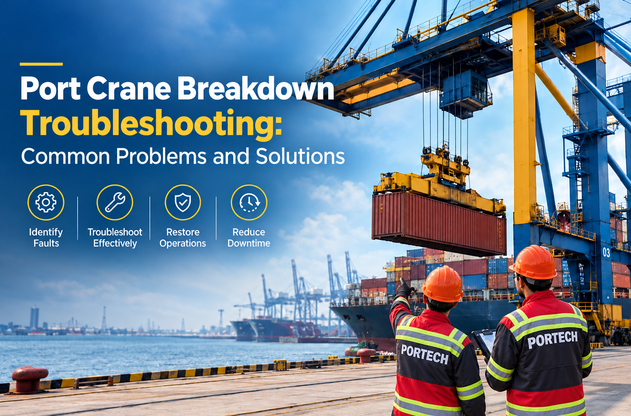
Unplanned crane downtime at a port terminal carries a cost that extends well beyond the repair bill. Berth windows are lost. Vessel schedules are disrupted. And the maintenance team is expected to diagnose, resolve, and return the crane to service under significant operational pressure. What determines the outcome in those situations is the discipline to follow the right diagnostic sequence when speed is the instinct. Faults that are reset without being understood tend to return. Problems that are partially addressed tend to escalate.
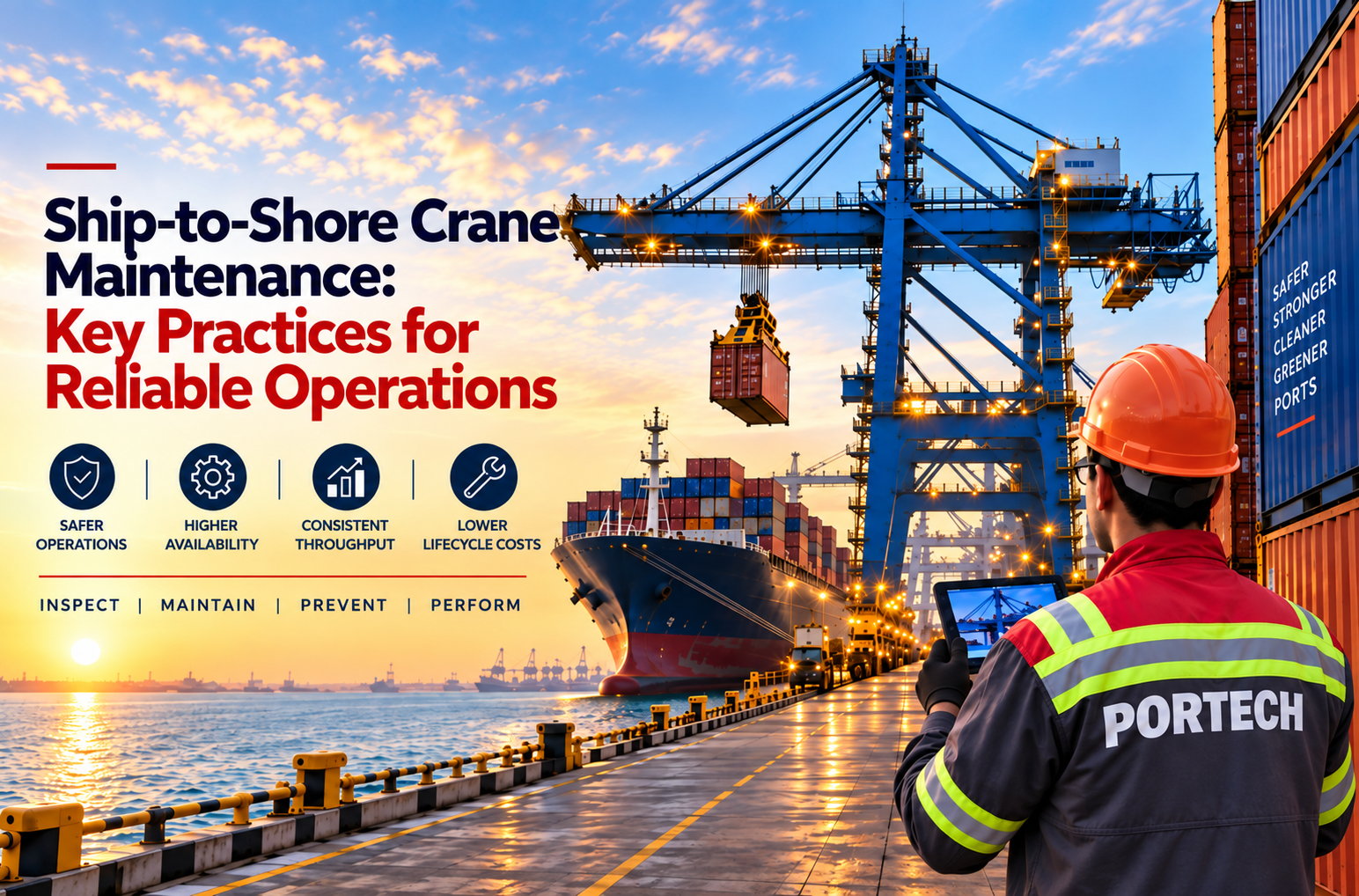
A ship-to-shore crane going down mid-operation isn't just an equipment problem. It's a cascading event like vessels waiting at berth, cargo schedules disrupted, terminal productivity numbers taking a hit that takes days to recover. And in most cases, the failure that caused it didn't happen overnight. At PORTECH, we have inspected and serviced ship-to-shore cranes across Indian ports long enough to recognise a pattern: most unplanned breakdowns have a history. They show up in deferred inspections, in maintenance logs that haven't been updated, in components that were flagged once and never followed up on. Reliable operations don't come from reacting to failures. They come from a maintenance discipline that prevents them.
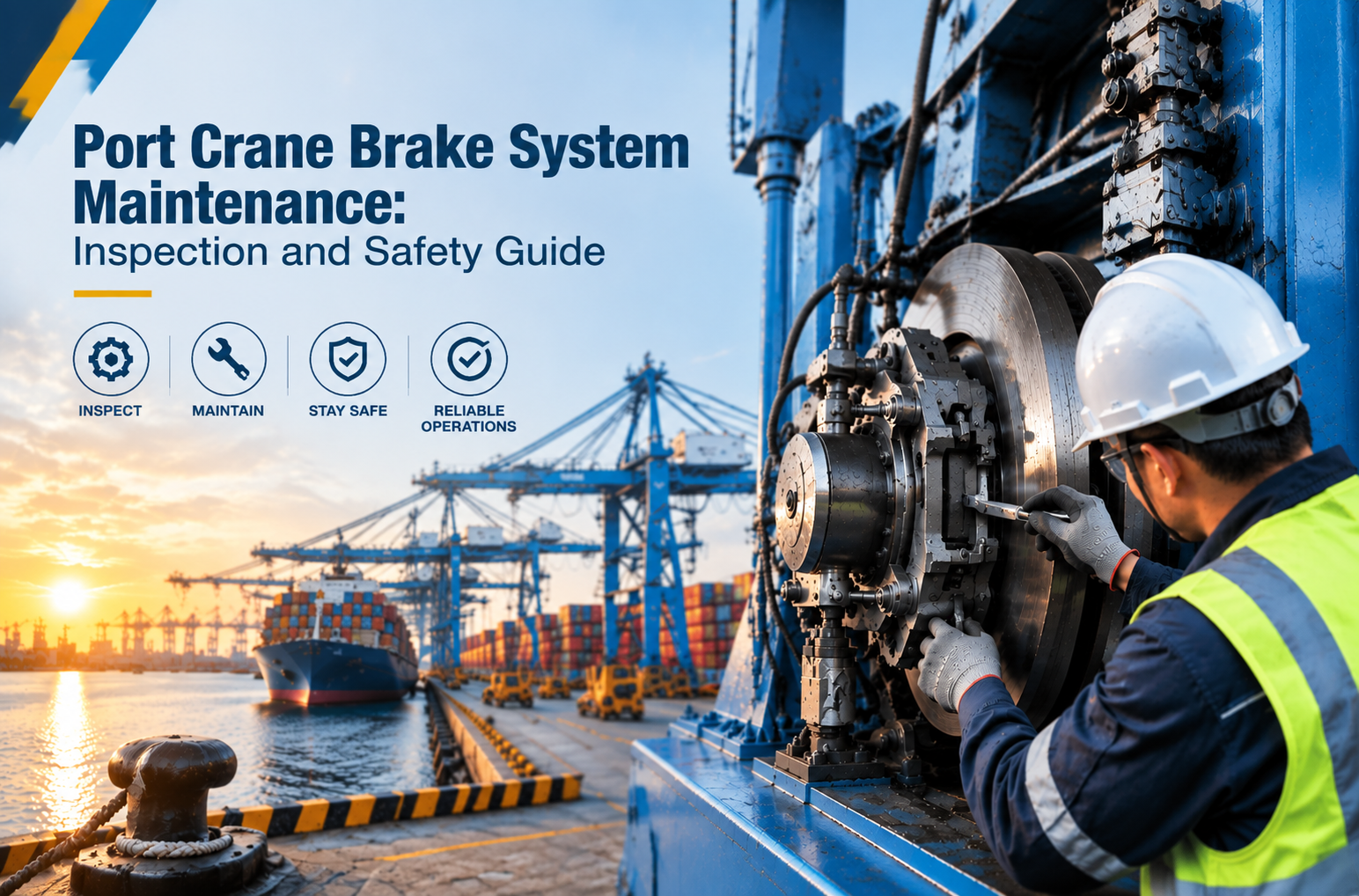
A port crane's brake system doesn't get a second chance to fail. On STS, RTG, RMG, and mobile harbour cranes, brakes go through constant stop-and-hold cycles under heavy loads, salt air, dust, and heat conditions that wear components down faster than almost any other part of the machine. Degraded brakes show up as increased clearance, reduced holding torque, overheating, or delayed engagement, and in the worst cases, a load drop or uncontrolled travel. That's why brake maintenance is routine work by trained personnel, backed by periodic thorough examination from a competent person, to catch deterioration before it becomes dangerous.
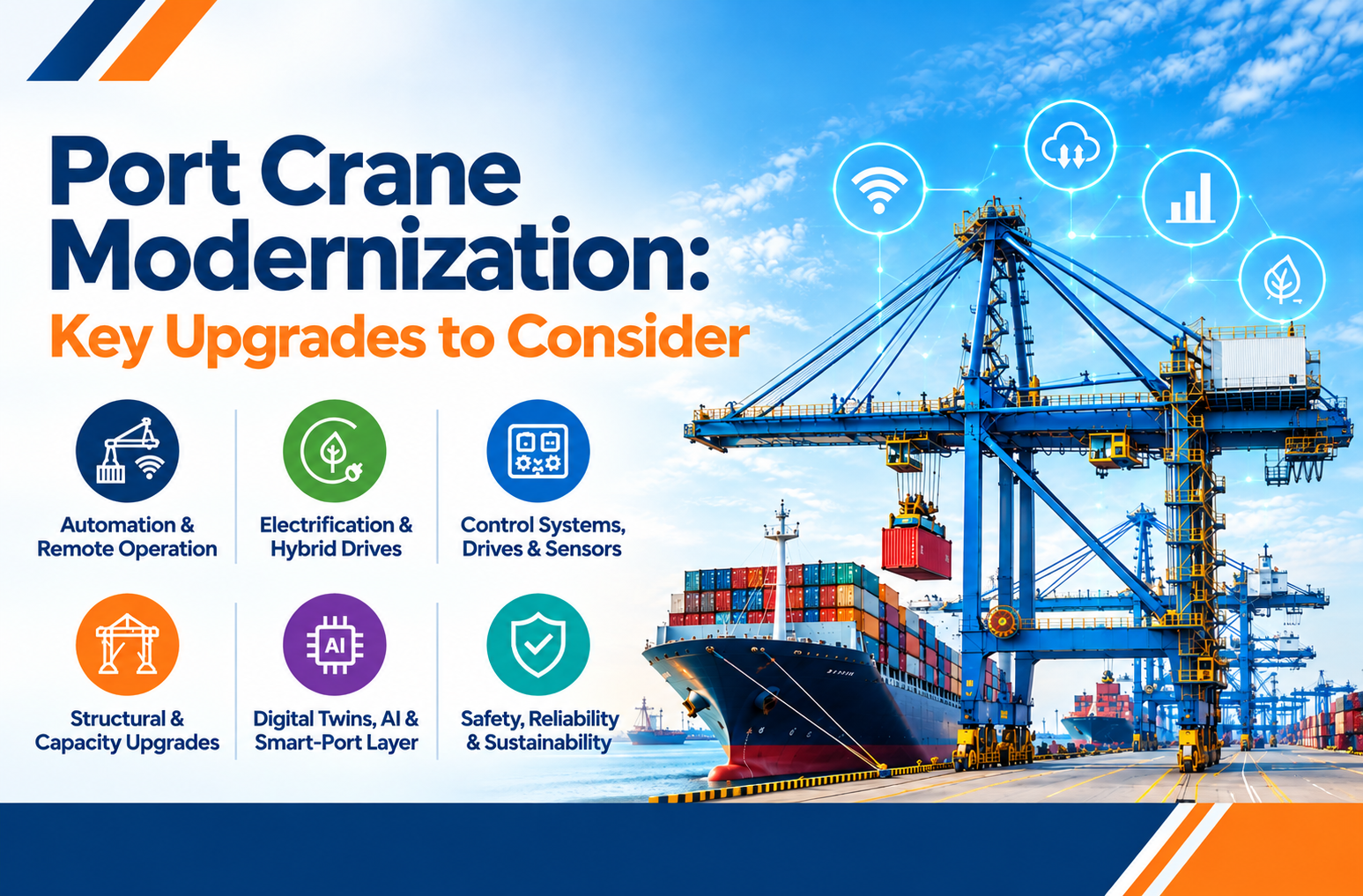
Indian ports are handling bigger ships, tighter turnaround targets, and stricter emissions mandates than they were even five years ago. That combination is pushing port crane modernization to the top of the capex list at terminals across the country. The upgrades that matter most aren't cosmetic. They touch automation, electrification, control systems, structural capacity, and the digital layer that ties a crane fleet together. Here is what's actually driving crane technology upgrades right now, and where Indian terminals are already putting them to work.
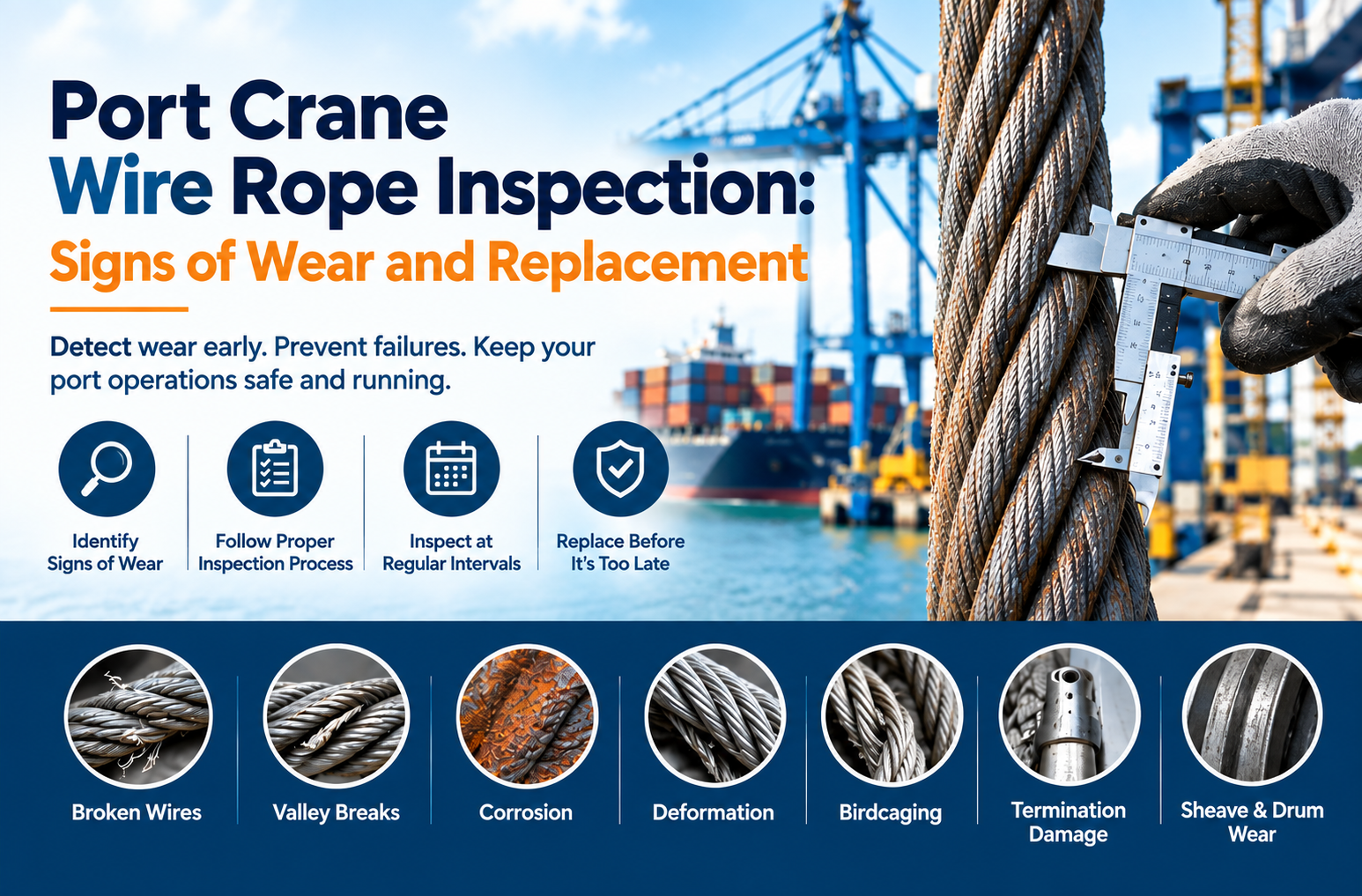
A wire rope failure on a port crane isn't a minor breakdown. it's a dropped load, a damaged vessel, or worse, a fatality. Yet many operators still rely on a single "percentage rule" to decide when a rope needs replacing. That's not enough. Replacement should be governed by whichever discard criterion applies first: the crane manufacturer's manual, the relevant law, or a governing standard such as ISO 4309:2017, which specifically addresses inspection and discard for portal, floating, offshore, and multi-layer-spooled cranes.
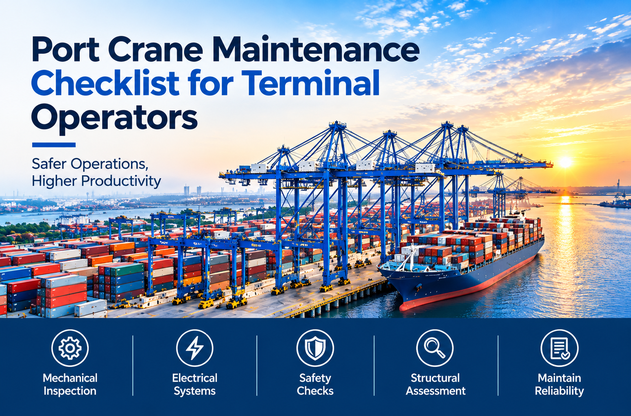
Ask any terminal manager what keeps them up at night, and crane downtime is usually near the top of the list. A single STS crane out of service during a vessel call ripples into berth delays, schedule penalties, and a queue of ships waiting their turn. The terminals that avoid this aren't the ones with newer cranes. They're the ones with a maintenance rhythm that catches problems while they're still small.
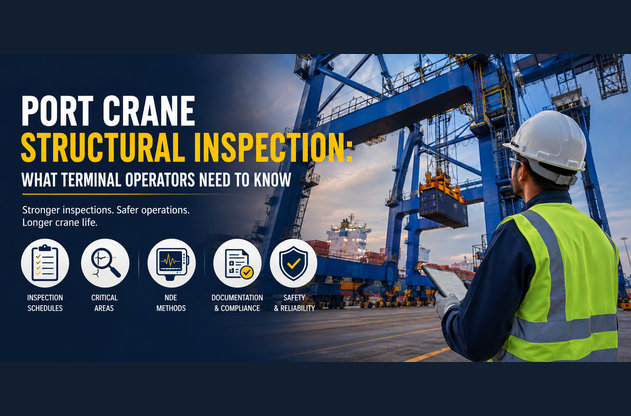
Every port crane on your terminal is carrying more than containers. Its portal legs, boom hinges, and trolley girders are absorbing dynamic loads thousands of times a day, in a marine environment that eats away at steel faster than most inland equipment ever experiences. Over years of continuous operation, that combination of cyclic stress and salt-air corrosion is exactly what structural inspection programmes exist to catch long before it becomes a crane that's out of service, or worse, a safety incident.
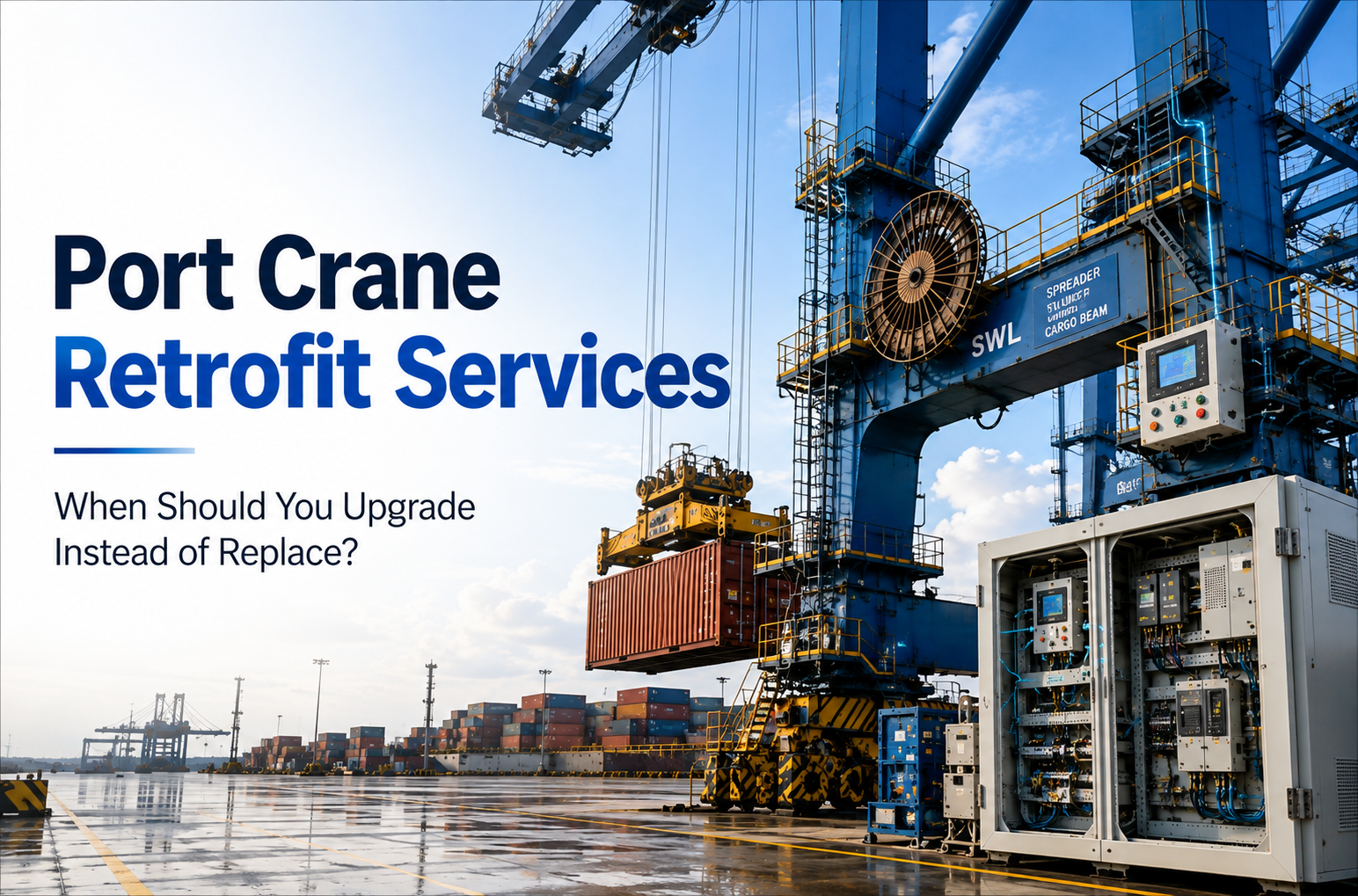
When a port crane starts showing its age through failing systems, rising maintenance costs, compliance gaps, the instinct is often to replace it. A new crane means new warranties, new standards, a clean slate. But in many cases, that instinct is expensive and unnecessary. The right question isn't "is this crane old?" It's "is the structure still sound?" Because if it is, a well-scoped retrofit can restore, and often exceed, original performance at a fraction of the cost and downtime of a new crane. The challenge is knowing when that's true and when it isn't.
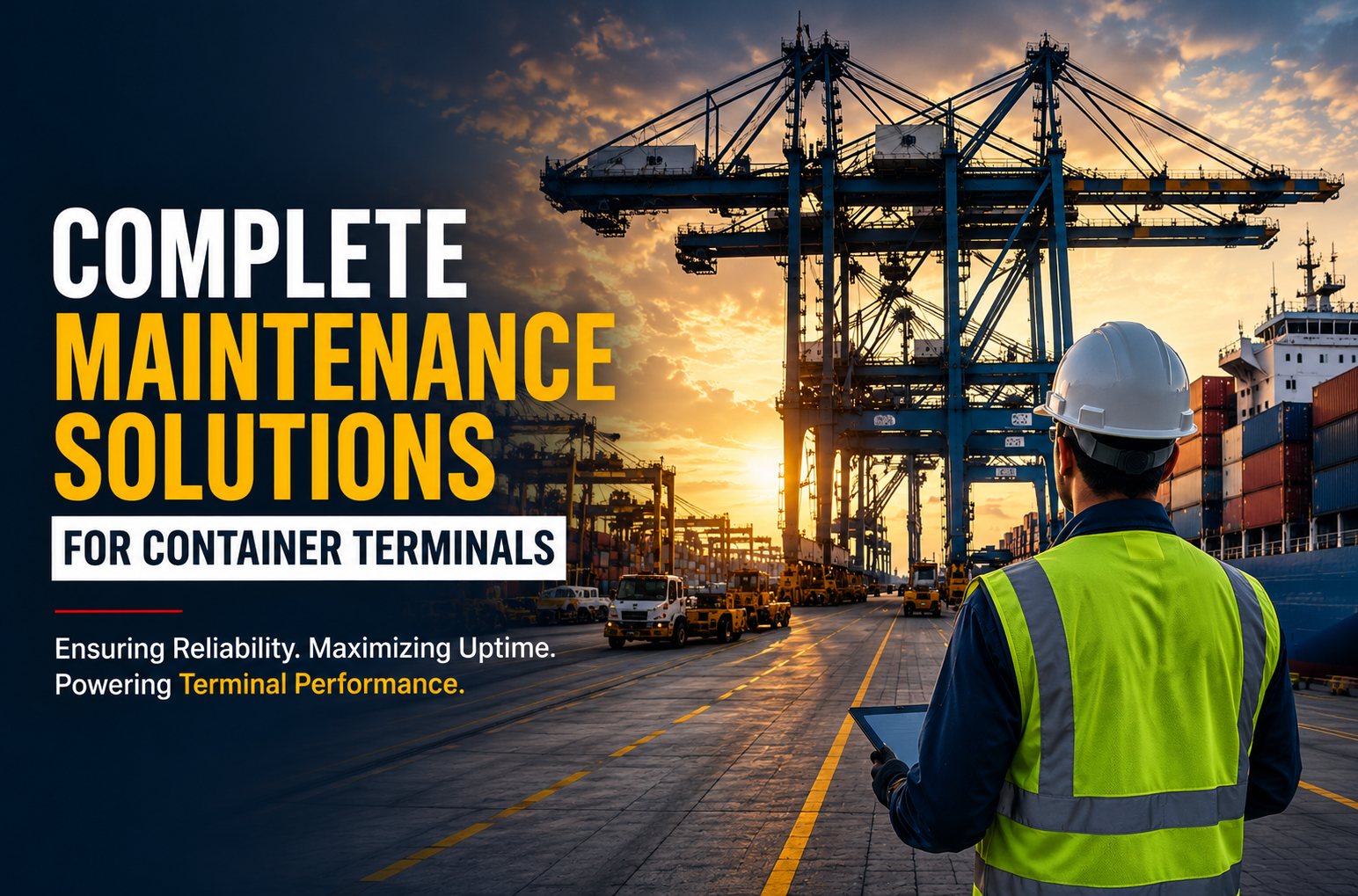
Container terminals operate in a demanding environment where speed, safety, and equipment reliability directly influence productivity. Cranes and cargo-handling equipment work continuously under heavy loads, making regular maintenance essential for preventing unexpected breakdowns and operational delays. A well-planned maintenance strategy helps terminal operators improve equipment availability, extend asset life, and maintain safer working conditions. PORTECH Engineering provides comprehensive engineering and maintenance services for port cranes, terminals, and related industrial equipment, with solutions designed around the operational requirements of each customer.
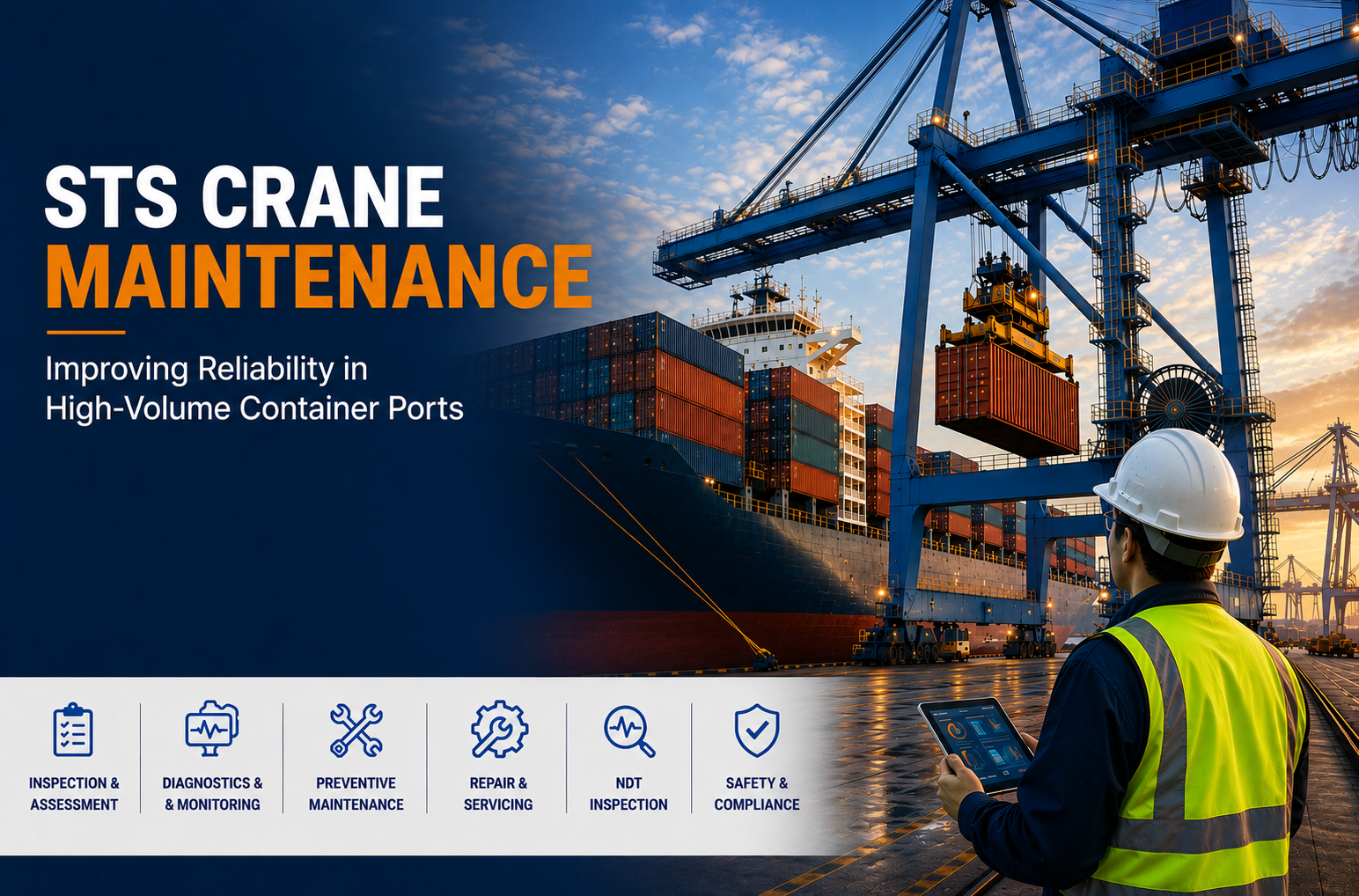
Modern container ports operate under constant pressure to move cargo quickly, safely, and efficiently. At the center of these operations are Ship-to-Shore (STS) cranes, which handle containers between vessels and the terminal. Because these cranes operate continuously in demanding marine environments, regular STS crane maintenance is essential for preventing unexpected downtime and maintaining terminal productivity.
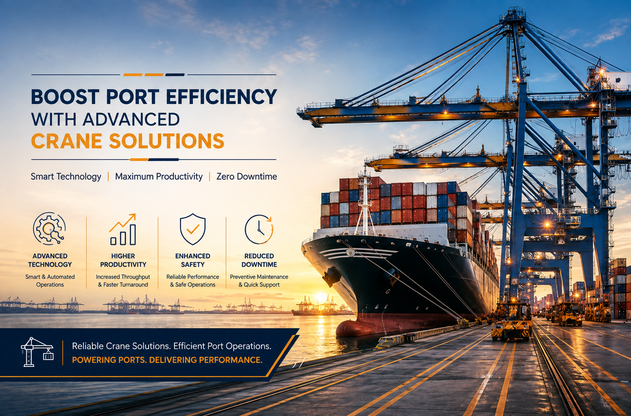
In today’s rapidly evolving global trade landscape, ports serve as the backbone of seamless cargo movement and supply chain efficiency. As cargo volumes continue to rise and turnaround times become increasingly demanding, enhancing port efficiency is no longer a choice it is a necessity. One of the most effective ways to achieve this is by implementing advanced crane solutions that integrate modern technology, automation, and expert maintenance services.
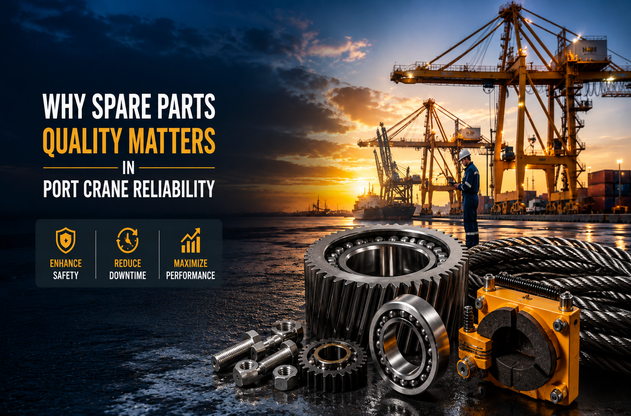
Ask any terminal manager what keeps them up at night, and downtime is usually near the top of the list. What often gets overlooked is where that downtime actually originates, not always in the big-ticket components, but in the spare parts quietly holding the machine together. At PORTECH, we have seen enough breakdowns trace back to a single substandard part to know that spare parts quality isn't a line-item decision. It's a reliability decision.
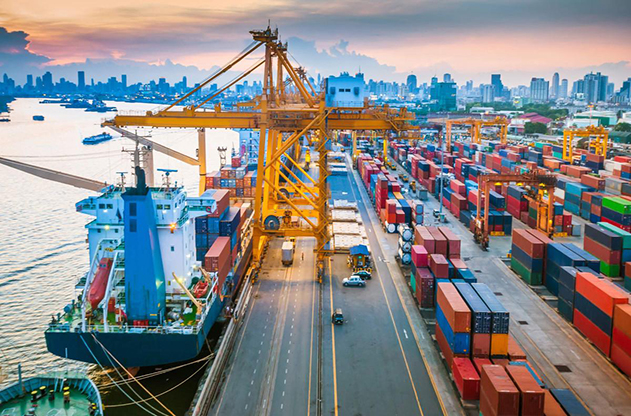
Every tonne of bulk cargo that moves through a port — coal, clinker, grain, ore — passes through a chain of mechanical decisions. It involves the crane or handler that lifts it, the conveyor that carries it, the drive that powers it. Get those decisions right, and a terminal can move more cargo without adding a single square metre of yard space. Get them wrong, and even a well-laid-out port ends up bottlenecked at the berth.
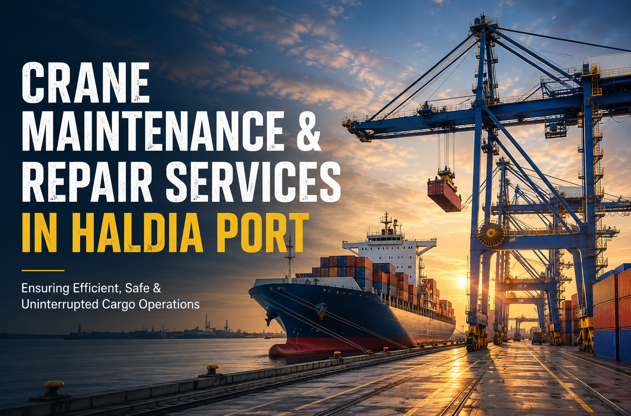
In the fast-paced world of global trade, a port is only as efficient as the machinery that powers it. For a critical maritime hub like Haldia Port, the seamless flow of cargo relies heavily on the performance of quay cranes and mobile harbor units. However, operating in a demanding coastal environment presents unique challenges that can quickly turn a productive terminal into a bottleneck. In a demanding marine environment, any interruptions can be costly and hazardous.
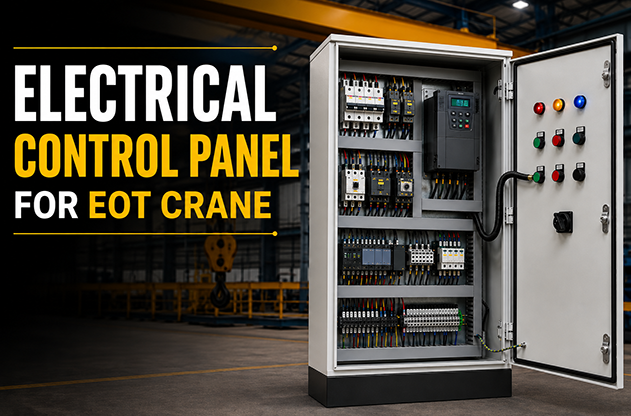
If you have ever stood next to an EOT crane mid-lift and watched it stall, jerk, or throw a fault code out of nowhere, chances are the problem wasn't the hoist motor or the wire rope. It was the control panel. The electrical control panel is the nerve centre of any EOT (Electric Overhead Traveling) crane. Every motion hoisting, cross travel, long travel is governed by the logic, contactors, and protective devices sitting inside that panel. Get the panel design wrong, or let its maintenance slide, and you're not just risking downtime. You're risking safety.
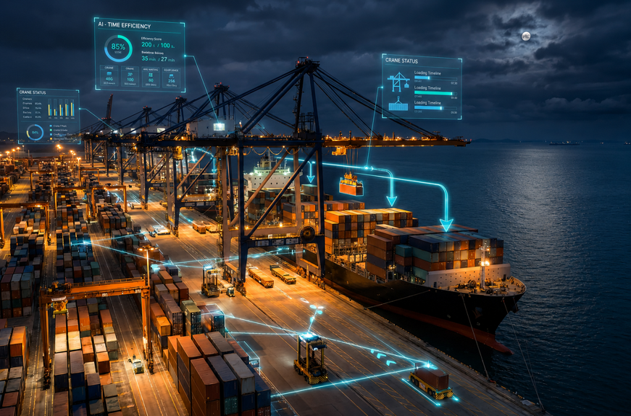
At PORTECH, we have spent years inside the machinery of ports. We commission and maintain the cranes that move the world's cargo, and that vantage point gives us a grounded view of what automation actually delivers versus what it promises. The conversation around terminal automation is often driven by theory. We prefer to talk about what happens on the ground.
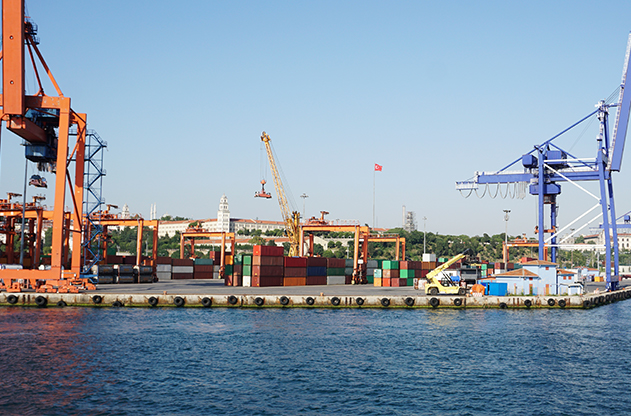
Walk through any major bulk terminal in India, and you'll notice something the throughput numbers don't always capture: the difference between a well-run port and a struggling one usually comes down to equipment reliability, not equipment count. Ports like Chennai and Mumbai are handling more cargo, more complex machinery, and tighter margins than ever before. The terminals pulling ahead are the ones that treat equipment support as a core strategy, not an afterthought.
India’s ports are poised for change. As global supply chains are being redefined and India emerging as a manufacturing and logistics hub, our ports are under unprecedented pressure. Vessel sizes are increasing, cargo volumes are soaring, and operational efficiency is a competitive differentiator in the global marketplace. Yet lurking behind every successful port operation is a crucial but often overlooked element: the reliability and safety of its cranes.
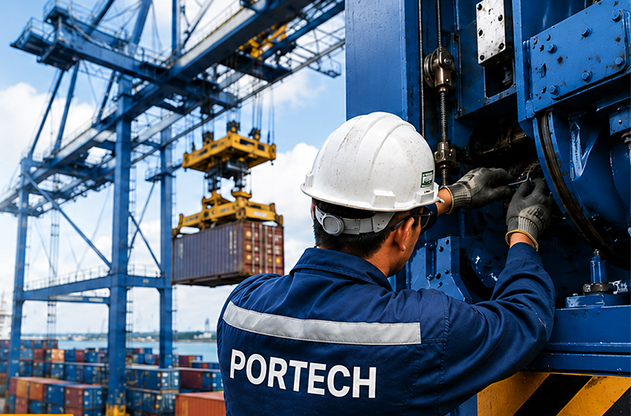
When a crane drops, everything stops. That’s why PORTECH doesn’t wait until a failure to intervene. We build reliability right into your operation with a full complement of crane repair and maintenance services that maximize uptime, extend equipment life and keep your crews safe.
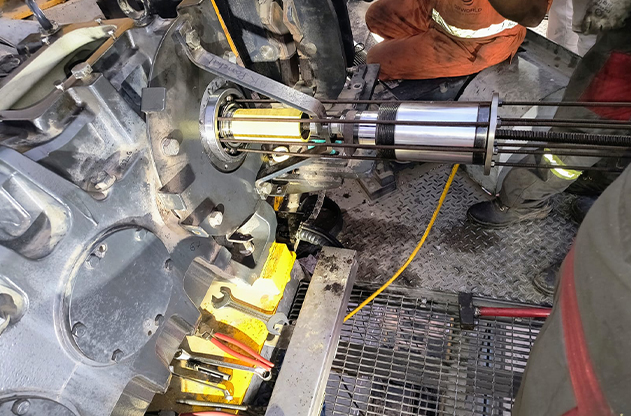
Modernizing and automating older cranes at port terminals is a cost-effective alternative to replacement. It generally costs only 15-30% of the price of a new crane, and adds 5-10 years to its useful life. "These upgrades incorporate advanced technologies that dramatically improve safety and productivity.
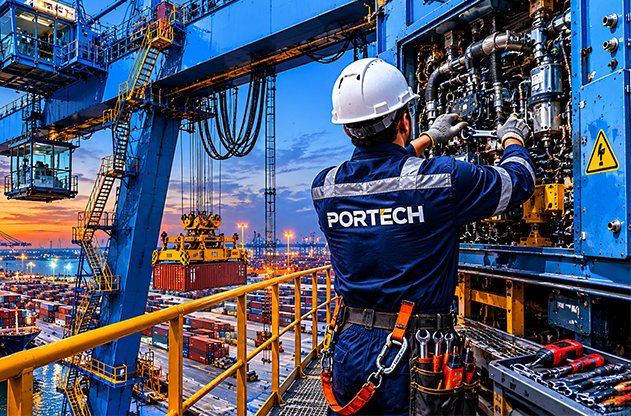
A ship is tied up at your dock, ready to take on or discharge cargo. Your crane halts suddenly. That is when the cost of downtime shoots up , demurrage fees add up, schedules get pushed back, your port is standing is on the line. Such is the reality of port operations, where crane failures don’t just damage schedules, but also end up threatening profitability and operational credibility.
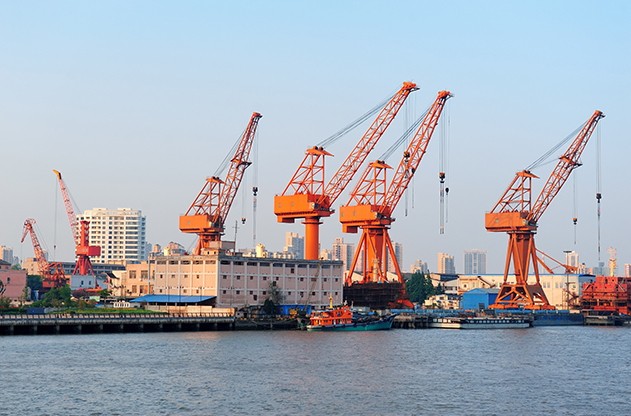
In India's bustling ports, where thousands of containers move daily and safety margins are razor-thin, the difference between a well-maintained crane and a neglected one is about efficiency and safety. This is where preventive maintenance stops being a nice-to-have and becomes a business imperative.
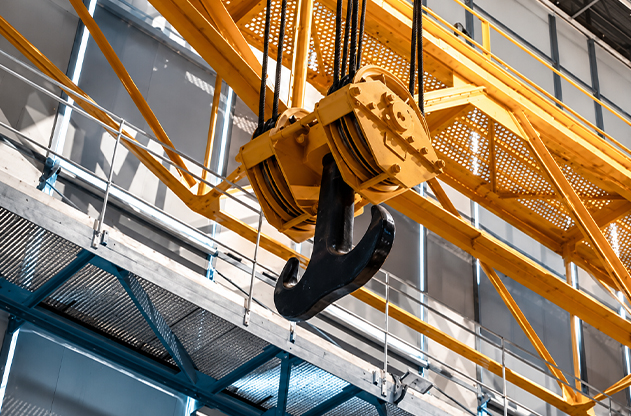
Electric Overhead Traveling (EOT) cranes are the backbone of industrial operations, from manufacturing facilities to construction sites and ports. These powerful machines lift, move, and transport heavy loads daily. However, like any equipment operating under constant stress, they require regular maintenance, inspections, and upgrades to remain safe and efficient. This is where professional EOT crane service providers become indispensable.
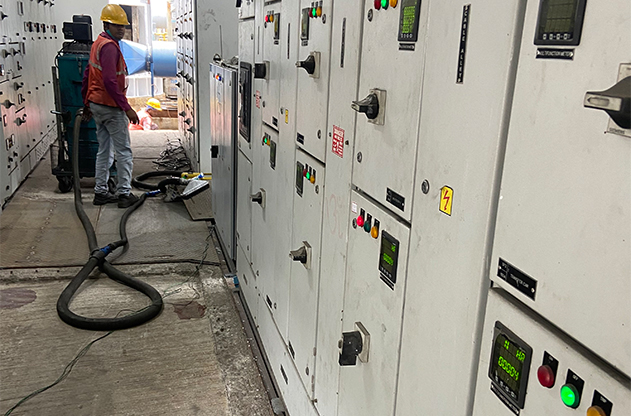
Port cranes are essential for efficient cargo handling in modern ports, enabling fast loading and unloading of containers and bulk materials. While their massive structures and lifting mechanisms often get the spotlight, one crucial component works silently behind the scenes—the electrical panel.
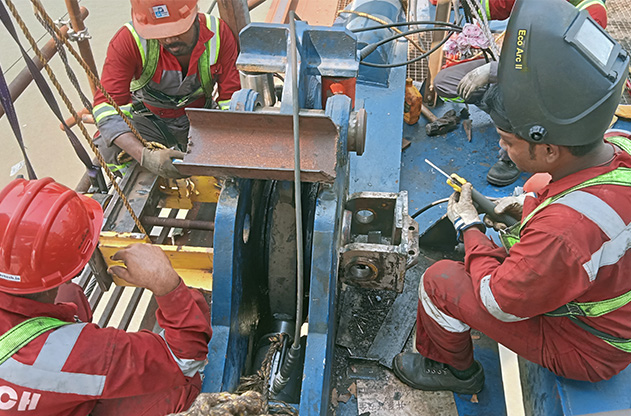
India’s port and logistics sector is growing rapidly, handling massive volumes of cargo every day. At the heart of these operations are port cranes—complex machines that require continuous maintenance to ensure smooth functioning. Without proper servicing, cranes can suffer breakdowns, safety risks, and costly downtime.
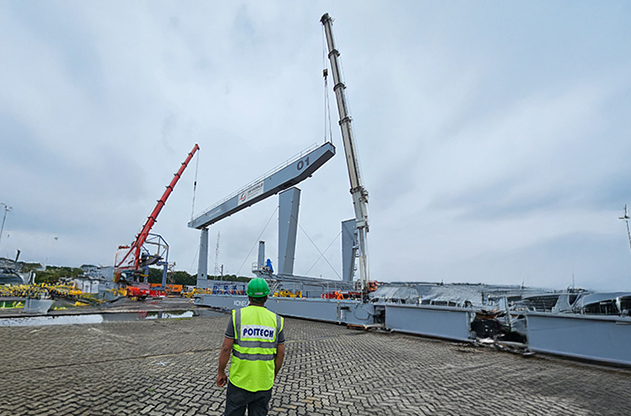
Port cranes are the backbone of modern shipping and logistics operations, handling massive loads with precision and efficiency. However, their performance and safety heavily depend on how well they are erected and commissioned. Improper installation can lead to operational failures, safety risks, and costly downtime.
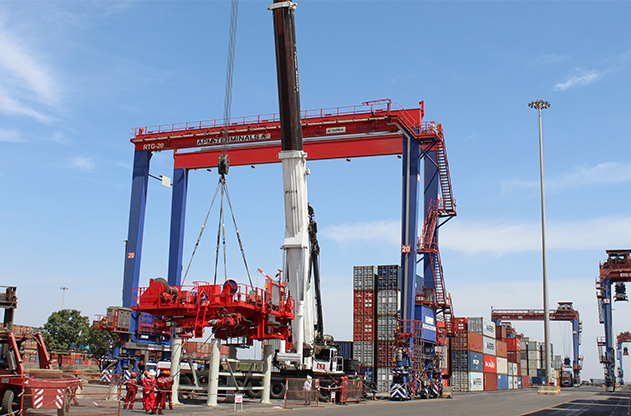
In the global supply chain, terminal productivity is dictated by the availability of its most critical assets. Whether handling containers with Ship-to-Shore (STS), Rubber-Tyred Gantry (RTG), and Rail-Mounted Gantry (RMG) cranes, or managing bulk materials with Stacker Reclaimers, the cost of equipment failure is measured in thousands of dollars per hour.
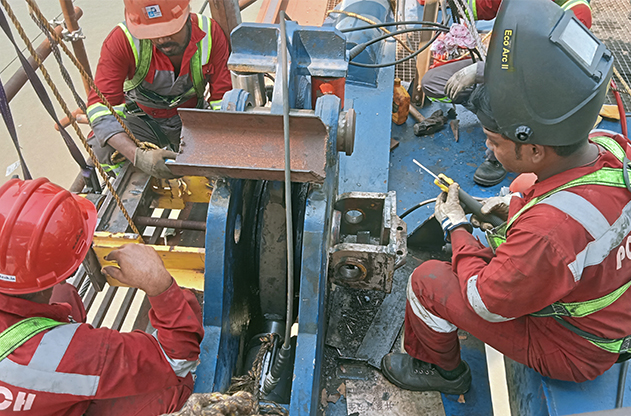
In today’s fast-paced maritime industry, ports operate under constant pressure to handle increasing cargo volumes efficiently. At the heart of these operations are heavy-duty port cranes that manage container loading, unloading, and logistics. However, like any complex machinery, cranes are subject to wear and tear. This makes professional port crane repair services essential for maintaining performance, safety, and operational continuity.
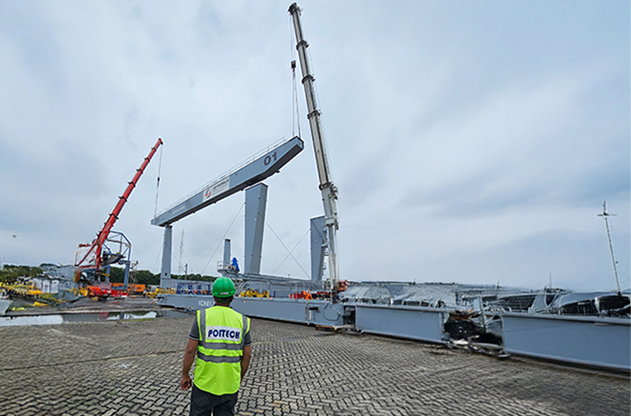
When a port installs a new crane, the margin for error is zero. Timelines are tight, investments are massive, and the pressure to go live is immense. That's exactly where PORTECH Engineering steps in. India's port infrastructure is growing at an unprecedented pace. From greenfield terminals to capacity expansions at established ports, the demand for reliable, technically sound crane installation and commissioning has never been greater. Yet this is one of the most complex phases of port equipment deployment.
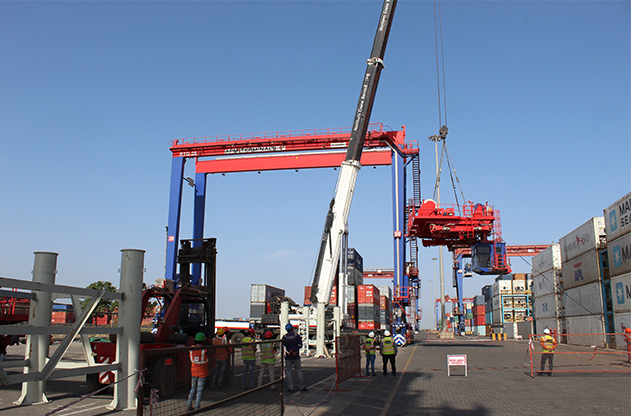
India’s rapidly expanding maritime and logistics industry depends heavily on efficient port operations. At the core of these operations lies advanced container handling equipment such as Ship-to-Shore (STS) cranes, Rubber Tyred Gantry (RTG) cranes, and Rail Mounted Gantry (RMG) cranes. To ensure seamless cargo movement, ports require reliable maintenance, modernization, and technical support services.
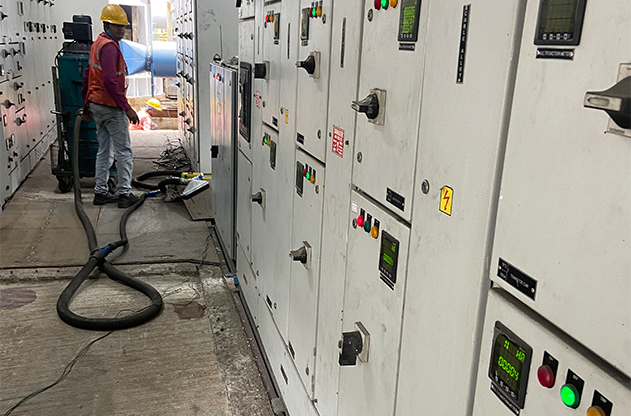
Ports are the backbone of global trade, handling millions of tons of cargo every year. At the heart of these operations are heavy-duty cranes that lift, move, and position containers and bulk materials. Because of their constant usage and heavy loads, these cranes require regular monitoring and maintenance. One of the most important tools for ensuring safe and efficient crane operations is inspection reporting.
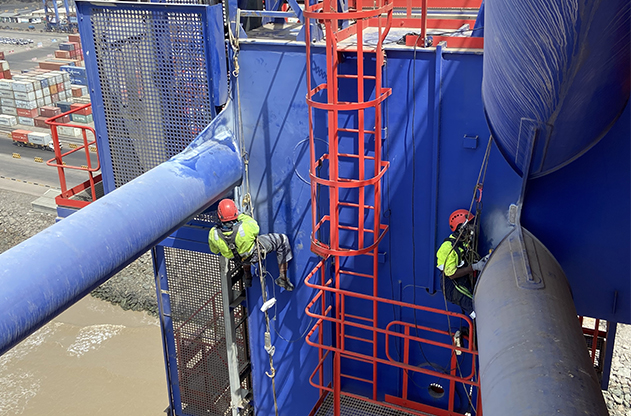
Ports are the backbone of global trade, handling millions of tons of cargo every year. At the heart of these operations are heavy-duty cranes that lift, move, and position containers and bulk materials. Because of their constant usage and heavy loads, these cranes require regular monitoring and maintenance. One of the most important tools for ensuring safe and efficient crane operations is inspection reporting.
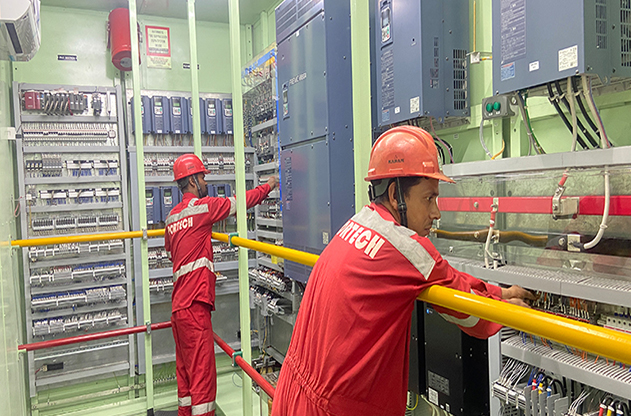
In the global maritime industry, the pace of technological change is accelerating. For those managing high-value terminal assets, the primary challenge is no longer just moving containers; it is doing so with increasing precision while drastically reducing the risk of catastrophic failure. While the industry often focuses on "new builds," the most significant innovations are currently happening in the realm of crane modernization and intelligent retrofitting.
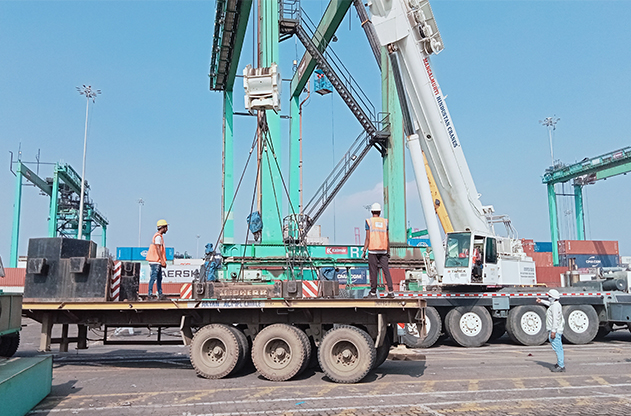
For India’s leading port operators, the pressure has never been greater. With throughput targets climbing and vessels getting larger, the margin for error is shrinking. Yet, many CTOs and Lead Engineers are discovering that the biggest gains in efficiency aren't coming from buying new equipment, they are coming from perfecting what they already own. At PORTECH Engineering, we have spent over two decades maintaining, erecting, and modernizing the cranes that keep Indian ports moving. What we've learned is this: efficiency isn't just about speed. It is about precision, reliability, and knowing exactly when to upgrade.
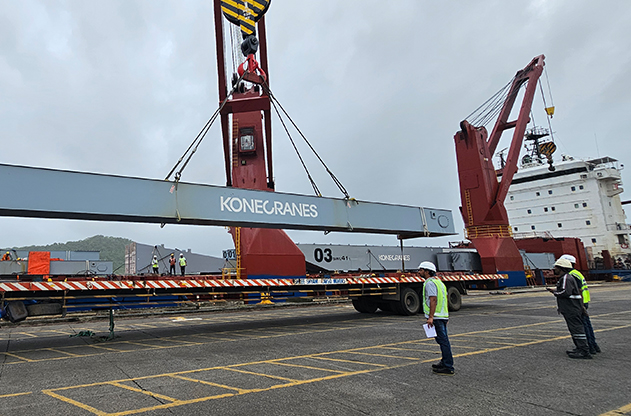
Saudi Arabia is a strong maritime country. Its ports like Jeddah Islamic Port, Dammam Port, and King Abdullah Port are very important for the country's economy. Thousands of containers are loaded and unloaded at these ports every day. Heavy duty cranes are used for this work. It is very important to keep these cranes in good condition. That is why there is a huge demand for Port crane maintenance services Saudi Arabia. Port cranes are not simple machines. They lift very heavy loads. If maintenance is not done on time, they can break down. Breakdown means work stoppage and loss of money. That is why companies get regular Port crane maintenance KSA done.
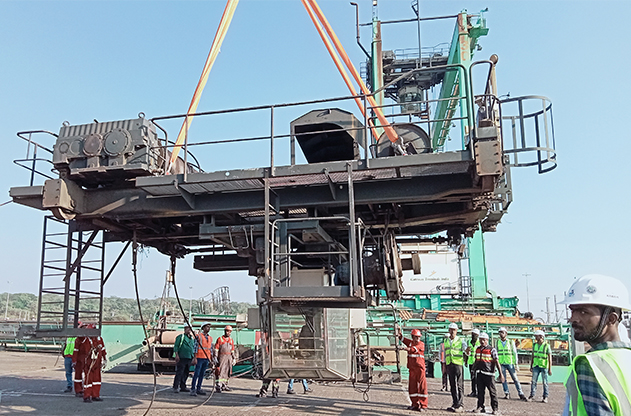
A port in Tuticorin has handled over 31 million tonnes of cargo this year, a remarkable achievement for what began decades ago. Today, it stands as India's third-largest container terminal with an installed capacity of 81 million tonnes per annum. PORTECH Engineering understands that Tuticorin's ambitious growth, from current operations to the "Mission 50" target of 50 million tonnes, depends entirely on crane reliability. We are ready to support this growth with comprehensive maintenance services that keep equipment operational when it matters most.
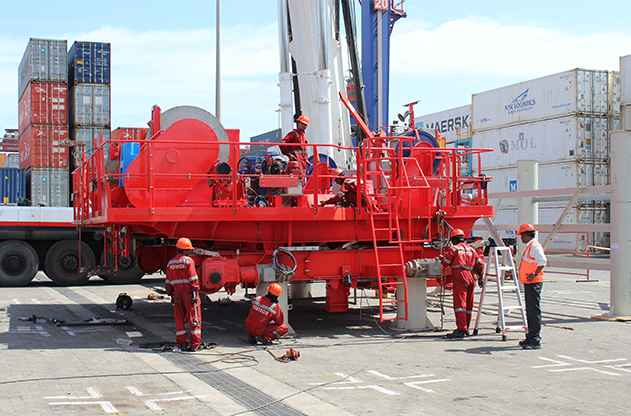
Haldia Dock Complex handled 49.54 million metric tonnes of cargo in the 2023-24 financial year, its highest throughput since inception. Behind these impressive numbers stands critical infrastructure: rail-mounted quay cranes and rubber-tyred gantry cranes working relentlessly at the container terminal, plus numerous other cranes handling bulk and liquid cargo across berths. Every tonne of that record cargo moved through crane systems added to India’s economic development.
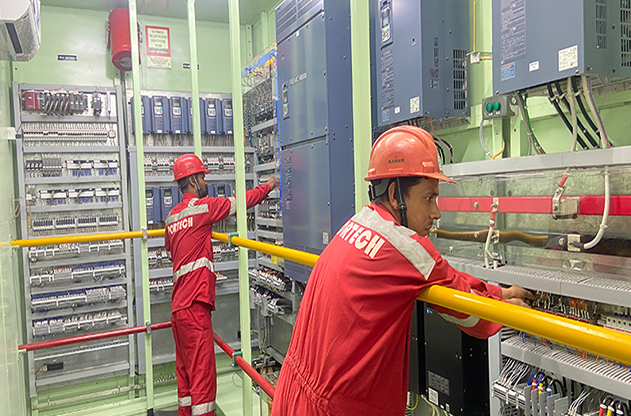
Ports are high-activity zones where massive machinery, heavy cargo, and skilled manpower work together around the clock. Among all port equipment, cranes play a critical role in loading and unloading containers, bulk cargo, and heavy materials. However, improper crane operation can lead to severe accidents, equipment damage, operational delays, and even loss of life.
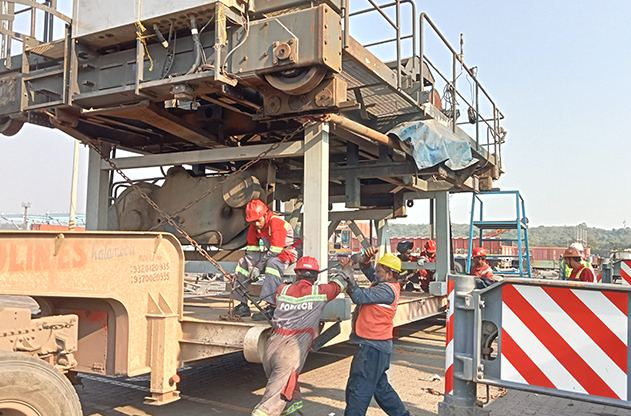
Port cranes are the cornerstone of modern maritime logistics, logging thousands of lifting cycles every day to keep cargo moving. In a terminal where efficiency and reliability determine competitiveness, even a few hours of crane downtime can escalate into delayed vessels, congested yards, financial penalties, and unhappy customers.
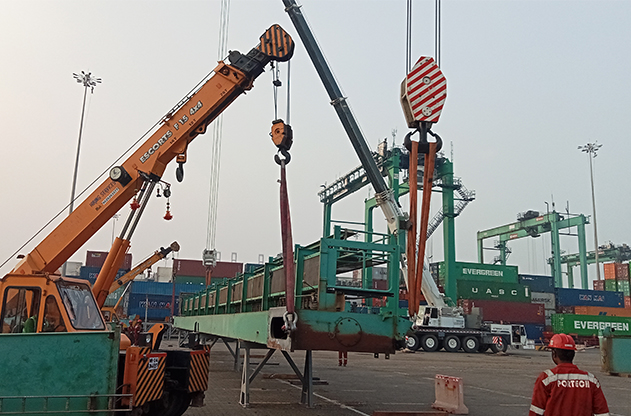
In high-traffic container terminals, the cost of an idle Ship-to-Shore (STS) or RTG crane isn't just measured in repair bills; it is measured in berth occupancy delays, vessel "demurrage," and lost throughput. For terminal managers and engineering leads, the challenge is clear: How do you maintain a high-cycle asset without disrupting the constant flow of cargo?
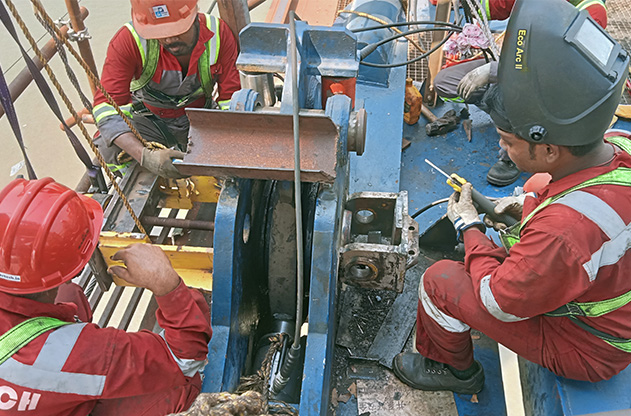
In today’s interconnected global economy, ports are the lifeline of international trade. The Middle East, strategically located as a crossroads between Asia, Europe, and Africa, boasts some of the busiest and most advanced maritime gateways in the world from Jebel Ali in the UAE to major terminals in Qatar, Kuwait, and Oman. At the heart of these high-throughput operations are port cranes: massive, precision machines that lift, move, and stack containers and cargo around the clock. Keeping these cranes
Port cranes operate in some of the most demanding industrial environments, handling heavy cargo under continuous duty cycles, harsh weather, and corrosive marine conditions. At the heart of every port crane lies a robust electrical and power panel system that ensures smooth operations, safety, precision, and efficiency. At PORTECH Engineering Pvt. Ltd., we specialize in designing, manufacturing, and maintaining
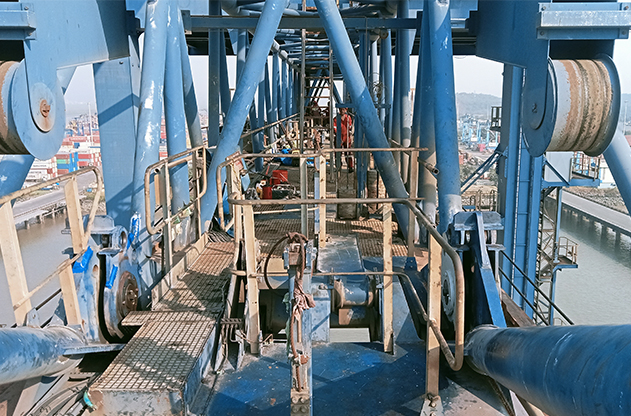
Port cranes are among the most critical assets in modern maritime logistics. In a high-tempo, 24/7 environment like Dubai’s ports and terminals, where container volumes and cargo throughput continue to grow, any crane failure can have significant operational and financial consequences. Scheduled maintenance, rigorous inspection processes, and adherence to local regulatory standards are therefore essential not just for safety, but also for operational efficiency and asset longevity.
-for-Port-Cranes.jpg)
Ports run on uptime. When quay cranes, mobile harbour cranes, or ship-to-shore units stop, cargo flow halts, demurrage piles up and costs skyrocket. For terminal operators, shipping lines, and port authorities, a proactive approach to crane maintenance is not optional it’s essential. PORTECH Engineering Pvt. Ltd. offers industry-leading Annual Maintenance Contracts (AMC) designed specifically for port cranes,
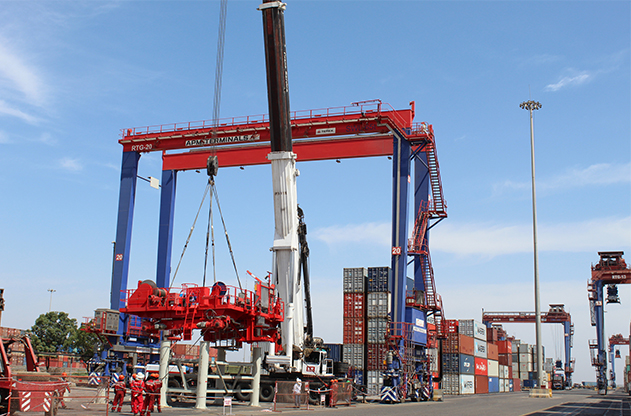
Jebel Ali, Khalifa, and Zayed of Abu Dhabi are three of the busiest ports in the world. Here, every hour spent operating a crane counts. Astute port operators are aware that professional maintenance keeps things running smoothly and that precise diagnostics identify issues early.
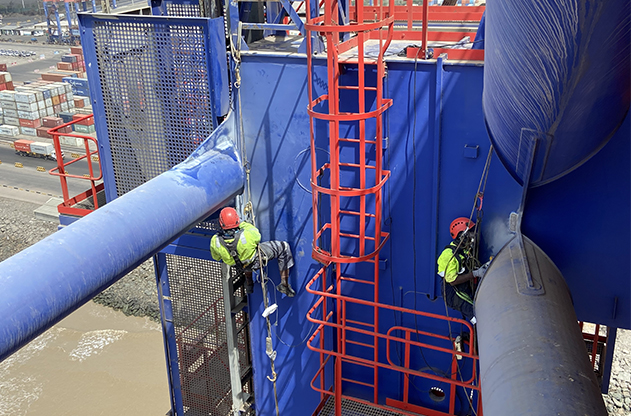
Port cranes are the lifeline of every port. They operate continuously under extreme load cycles, harsh weather conditions, and corrosive marine environments. Even a minor defect in these high-tonnage machines can lead to major breakdowns, safety risks, and costly downtime. This is where Non-Destructive Testing (NDT) becomes a vital part of crane maintenance.
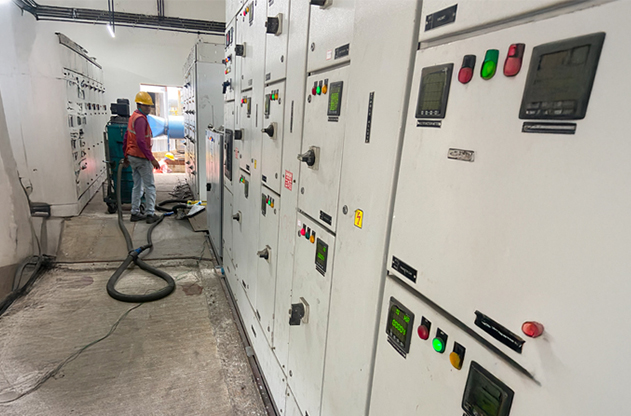
A port crane recently set a new productivity record at Cochin terminal in container handling by moving 177 containers. Not through replacement, but through intelligent modernization that transformed how it handles containers. The secret? Precision upgrades that turned decades-old mechanical systems into accuracy-driven machines.
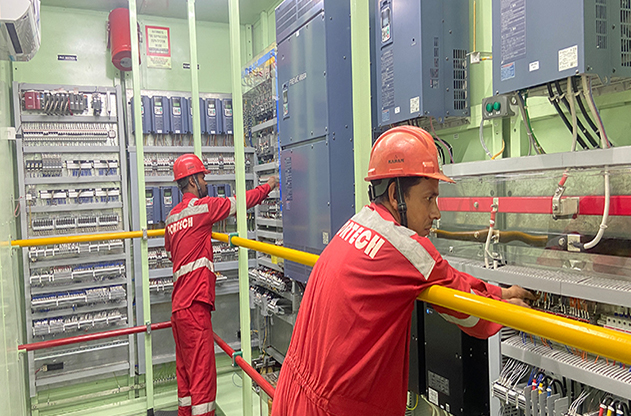
A port crane recently set a new productivity record at Cochin terminal in container handling by moving 177 containers. Not through replacement, but through intelligent modernization that transformed how it handles containers. The secret? Precision upgrades that turned decades-old mechanical systems into accuracy-driven machines.
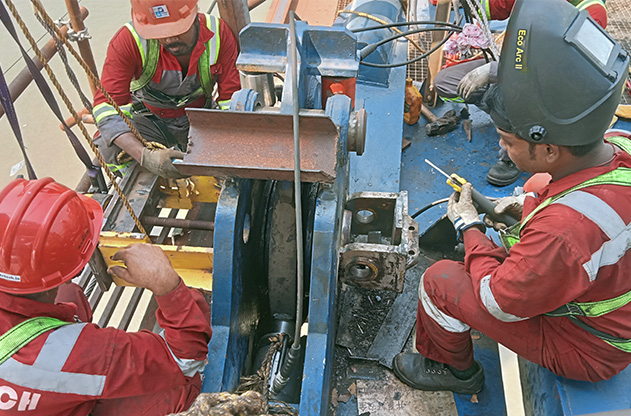
When a crane breaks down during vessel operations, the consequences ripple far beyond repair costs. Containers pile up, schedules get disrupted, and penalty clauses start ticking. Terminal managers know this anxiety; one equipment failure can throw an entire week's operations into chaos.
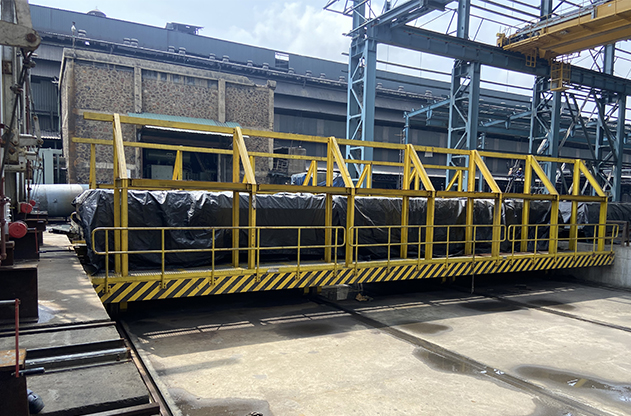
Electric Overhead Traveling (EOT) cranes form the backbone of material handling operations across Indian manufacturing facilities, warehouses, and industrial plants. From steel mills in Jharkhand to automobile plants in Tamil Nadu, these workhorses move thousands of tons daily. But here's what every plant manager knows, an idle crane
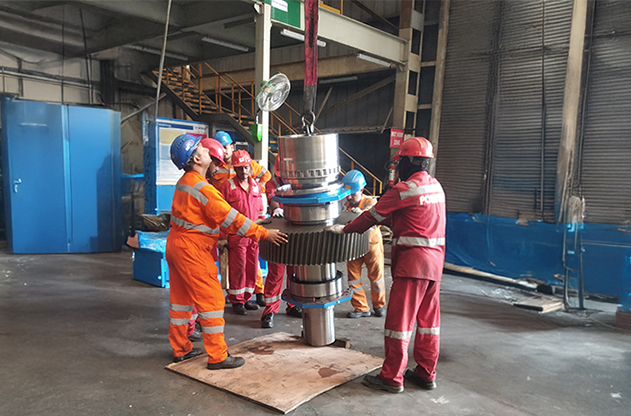
Kuwait's maritime infrastructure plays a pivotal role in the nation's economy, with ports like Shuwaikh, Shuaiba, and Doha handling significant container and bulk cargo volumes. The reliability of port cranes directly impacts operational efficiency, and maintaining these critical assets in Kuwait's harsh Gulf climate requires specialized
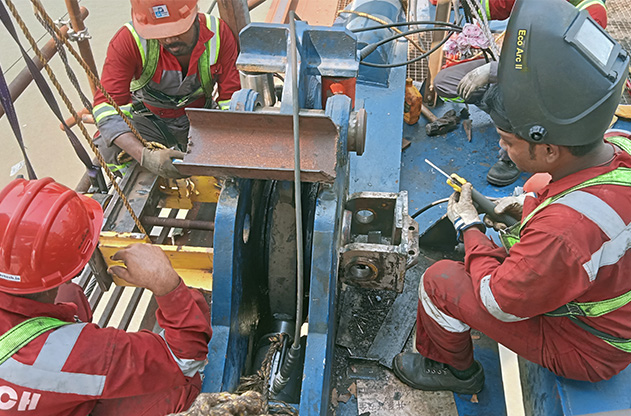
Port cranes are the lifeline of modern cargo terminals. When a Ship-to-Shore crane stops working during vessel operations, or a Rubber-Tyred Gantry crane breaks down in the yard, the entire terminal grinds to a halt. Vessels wait at anchor burning fuel, customers demand explanations, and revenue disappears by the hour.
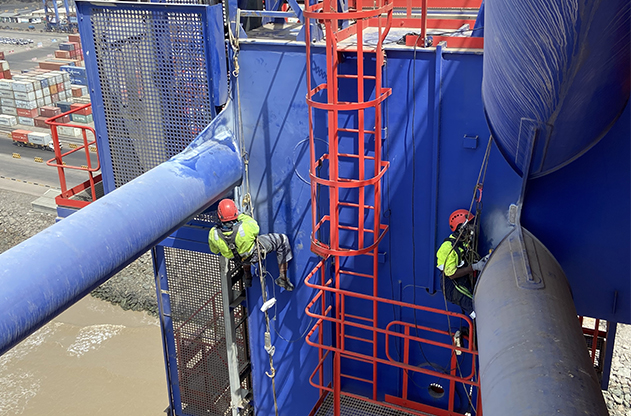
Preventive maintenance is a structured approach to crane care built on regular inspections, timely adjustments, and planned component replacement before failures occur. Rather than waiting for a problem to force you to shut down operations, preventive maintenance identifies and addresses issues while your cranes continue
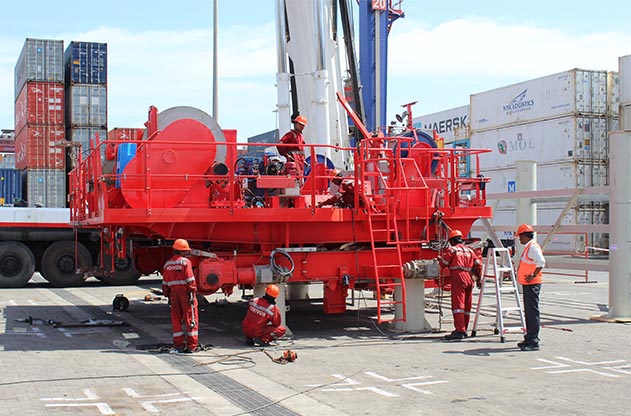
The reliability and efficiency of crane systems directly impact productivity, safety, and profitability. Whether you operate a bustling container terminal, bulk cargo port, or industrial facility, understanding the full spectrum of port crane solutions and services is essential for maintaining operational excellence.
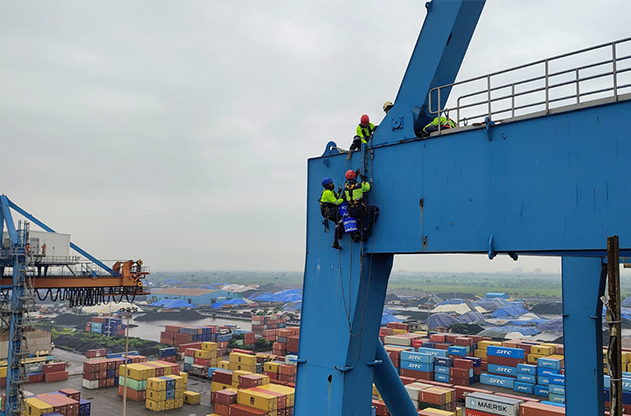
Oman's strategic ports—Sohar, Salalah, and Muscat—handle millions of tons of cargo annually through sophisticated port crane systems. Ensuring structural integrity and operational safety of these critical assets requires advanced Non-Destructive Testing (NDT) services that meet international standards while addressing Oman's harsh
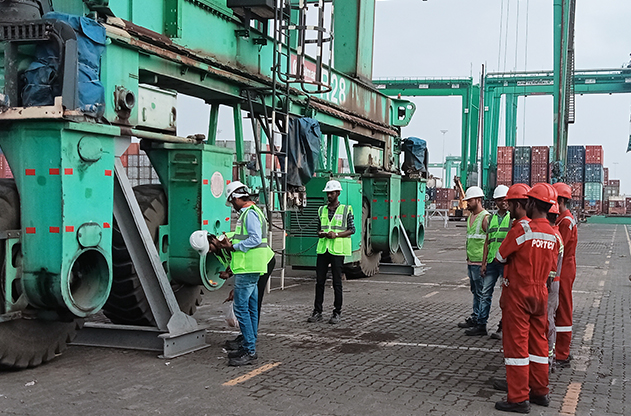
Over the past couple of decades, India's maritime industry has experienced unprecedented growth, with infrastructure investments reaching all-time highs and port throughput hitting all-time highs. Indian ports, which are the hub of international trade, handle more than 1.3 billion tons of cargo a year, making them vital hubs in global supply chains. The need for dependable, methodical port equipment maintenance
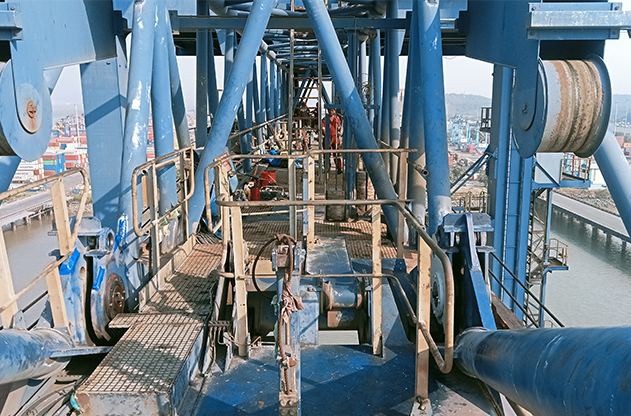
The United Arab Emirates is a global nexus of trade and logistics, with its ports serving as critical gateways for international commerce. In this high-stakes environment, the performance of your port cranes is not just a matter of efficiency; it's the very lifeline of your operations. Ensuring these massive machines are always in peak condition is a complex task that requires specialized expertise and a proactive approach.
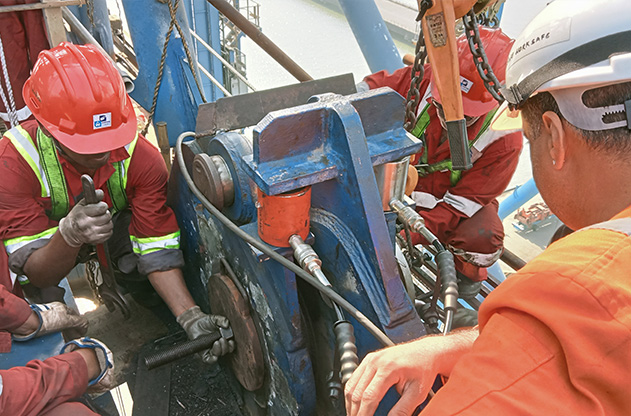
Qatar's ports stand as testament to the nation's remarkable transformation into a global logistics powerhouse. These maritime gateways witness massive container movements daily,
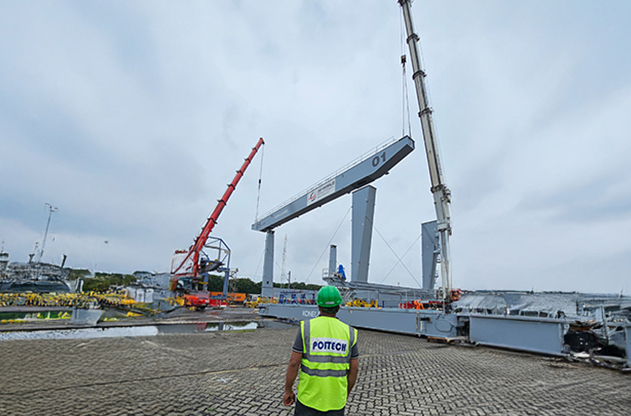
In today's highly specialized and intensely competitive global markets, companies are under constant pressure to optimize every aspect of their operations.
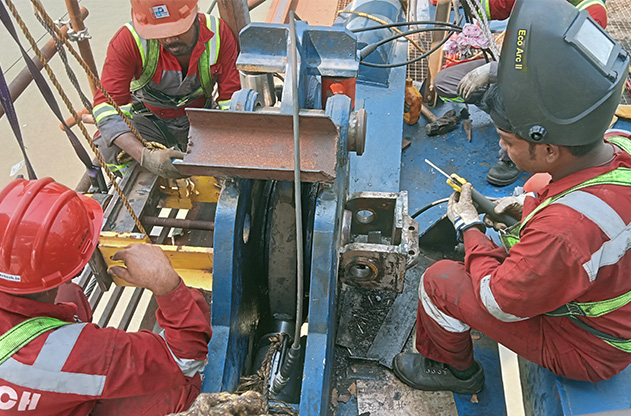
In India’s fast-growing maritime and logistics sector, port cranes are the lifeline of efficient cargo movement. From containerized shipping to bulk handling, cranes such
In the fast-paced world of port operations, efficiency and reliability are not just goals they are necessities. Ports rely heavily on cranes for loading, unloading,
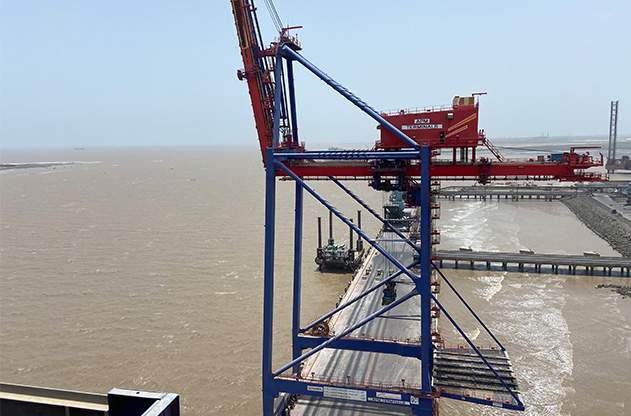
The efficient operation of Ship-to-Shore (STS) cranes is the linchpin of any modern port. These colossal machines are the vital link between maritime transport and land-based
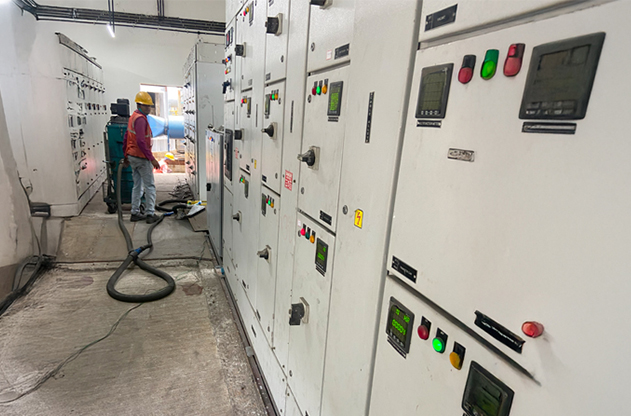
India's maritime industry continues to expand rapidly, with ports handling increasingly complex cargo operations that demand reliable, high-performance electrical systems.
When it comes to the seamless operation of port cranes—be it Quay Cranes (QC), Rubber Tyred Gantry Cranes (RTG), Rail Mounted Gantry Cranes (RMG)
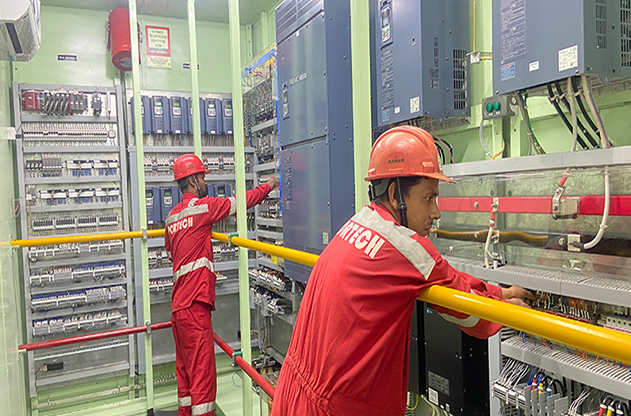
Optimizing port operations is no longer just about efficiency – it's about competitive advantage, safety, and future-proofing investments.