




How to reduce port crane downtime in high-traffic terminals
January 14,2026

In high-traffic container terminals, the cost of an idle Ship-to-Shore (STS) or RTG crane isn't just measured in repair bills; it is measured in berth occupancy delays, vessel "demurrage," and lost throughput. For terminal managers and engineering leads, the challenge is clear: How do you maintain a high-cycle asset without disrupting the constant flow of cargo?
At PORTECH Engineering, we believe that reducing downtime is not the result of faster repairs, but of superior engineering preparation. By focusing on strategic retrofitting and disciplined maintenance scheduling, terminals can transform their crane fleet from a liability into a high-reliability asset.
1. Strategic Retrofitting: Life Extension Over Constant Repair
The most effective way to reduce downtime is to eliminate the root cause of recurring failures. High-traffic environments subject cranes to immense structural and electrical fatigue. PORTECH specializes in comprehensive retrofits designed to modernize aging components before they fail. By replacing obsolete drive systems or reinforcing structural points, we extend the operational lifetime of the crane. This shifts the financial burden from unpredictable Opex (emergency repairs) to planned Capex (upgrades), allowing for a much more stable operational budget.
2. The Critical Spares Ecosystem
In a high-traffic terminal, a three-week lead time for a specialized part is unacceptable. PORTECH bridges this gap by providing critical spare parts specifically curated for the Indian port landscape. We don't just supply parts; we help terminals identify the "critical path" components, those single points of failure that could halt an entire berth. Having these high-wear components available off-the-shelf reduces Mean Time to Repair (MTTR) from days to hours.
3. Precision Execution: The PORTECH Maintenance Framework
High-traffic terminals cannot afford "open-ended" maintenance windows. Every hour a crane is out of the stack, the terminal loses money. PORTECH addresses this through a rigorous, research-driven planning process:
• Scope & Resource Identification: We carry out a thorough analysis to define the exact scope of work, ensuring no "surprise" repairs arise during the maintenance window.
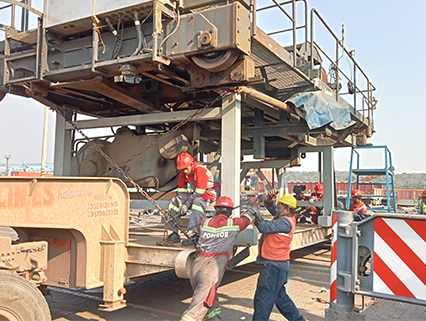
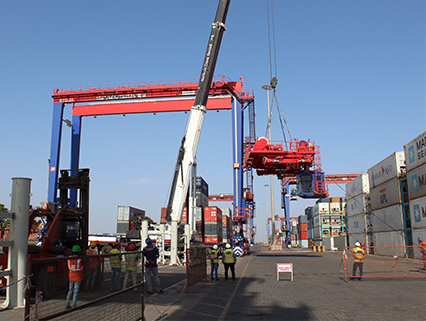
• Optimized Manpower Deployment: We align the necessary manpower and specialized resources to ensure tasks are performed in parallel, not just in sequence.
• Strict Scheduling: Our downtime maintenance is executed under strict time frames. We respect the terminal’s operational schedule, ensuring the crane returns to the line exactly when promised.
4. Risk Management and Research Analysis
Every lift carries risk, and every maintenance window carries the risk of "scope creep." PORTECH’s engineering team conducts a thorough research analysis and risk management assessment prior to any major intervention. By identifying potential structural or electrical risks before the crane is even taken offline, we mitigate the chance of unforeseen complications. This analytical approach ensures that the repair is not just a "quick fix," but a long-term solution that adheres to the highest safety standards.
Conclusion: Reliability is a Competitive Advantage
In the modern maritime industry, reliability is the greatest competitive advantage a terminal can have. By partnering with a specialist that understands the nuances of high-cycle operations, terminals can significantly reduce unplanned downtime and maximize the ROI of their crane fleet. PORTECH Engineering is dedicated to keeping India’s high-traffic ports moving. Let’s discuss how our retrofitting and scheduled maintenance programs can optimize your terminal’s performance.