





The Impact of Automation on the Efficiency of Port Container Terminals
July 01,2026
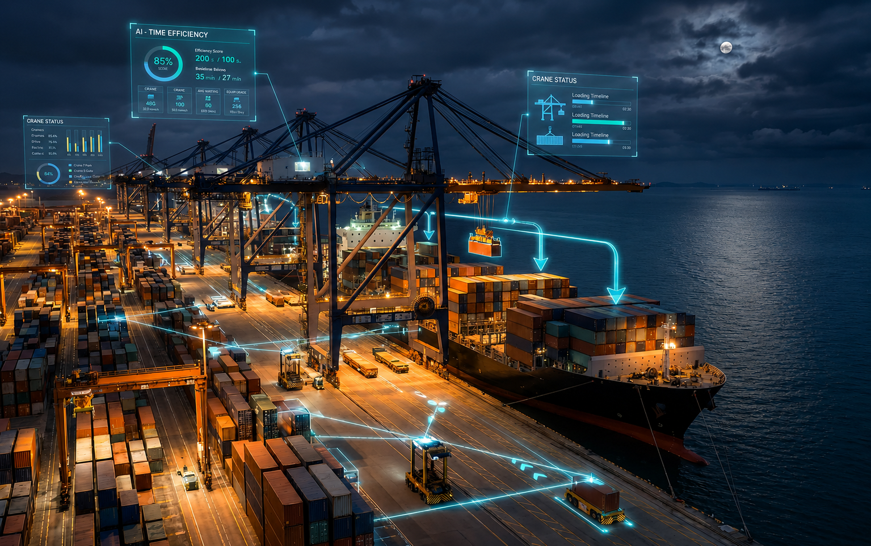
At PORTECH, we have spent years inside the machinery of ports. We commission and maintain the cranes that move the world's cargo, and that vantage point gives us a grounded view of what automation actually delivers versus what it promises. The conversation around terminal automation is often driven by theory. We prefer to talk about what happens on the ground.
The Productivity Paradox
Terminal operators frequently approach automation expecting productivity gains of 25% to 50%. The reality, as several industry studies show, is more nuanced. In some cases, automated terminals have recorded productivity 7% to 15% lower than their conventional counterparts. Crane performance tells a similar story. Manual terminals often post gross moves per hour in the high 30s, while fully automated terminals can trail behind in the low 20s. This isn't an argument against automation, but a reminder that ports aren't warehouses. Harsh outdoor conditions, unpredictable vessel arrivals, and non-standard cargo (oversized loads, irregular weights) create "exceptions" that automated systems still struggle to handle as fluidly as experienced human operators. Understanding these exceptions and engineering around them is where we believe the real value of automation is unlocked.
Where Automation Actually Wins: Consistency, Not Just Speed
The strongest case for automation isn't necessarily raw speed; it's reliability. Automated systems dramatically reduce performance variability, enabling continuous 24/7 operation without the natural slowdowns that come with shift changes and manual breaks. Just as importantly, automation removes a category of human-dependent risk from the equation. This became especially clear during the COVID-19 pandemic, when constrained labour availability exposed just how valuable consistent, human-independent operations can be. For terminal operators, that's operational resilience.
Land and Cost Efficiency: The Quieter Wins
Automated stacking systems allow terminals to achieve significantly higher yard density, a meaningful advantage for ports operating with limited space for expansion. On the cost side, automation remains a genuine driver of savings. Operating expenses typically fall by 15% to 35% a solid outcome, even if it often lands short of the 25% to 55% reductions operators initially anticipate. The gap between expectation and reality here isn't a failure of automation; it's a signal that successful automation requires realistic planning, precise engineering, and the right partners to implement it well.
Looking Ahead: Port 4.0
The next chapter for terminal efficiency isn't just about adding more automated equipment it's about a fundamental shift in how ports operate. Port 4.0 envisions the terminal evolving from an asset operator into a service orchestrator: using artificial intelligence, big data, and deep integration across the wider port community to resolve constraints across the entire value chain, not just within terminal gates.
Our Takeaway
Automation is not a silver bullet, and it was never meant to be one. Its real value lies in consistency, resilience, and long-term operational stability, outcomes that depend heavily on how well the underlying equipment is engineered, maintained, and integrated into the broader system. That's the work we do every day at PORTECH: building the engineering foundation that allows automation to deliver on its promise, not just its marketing.