





Port Crane Retrofit Services: When Should You Upgrade Instead of Replace?
August 26,2026
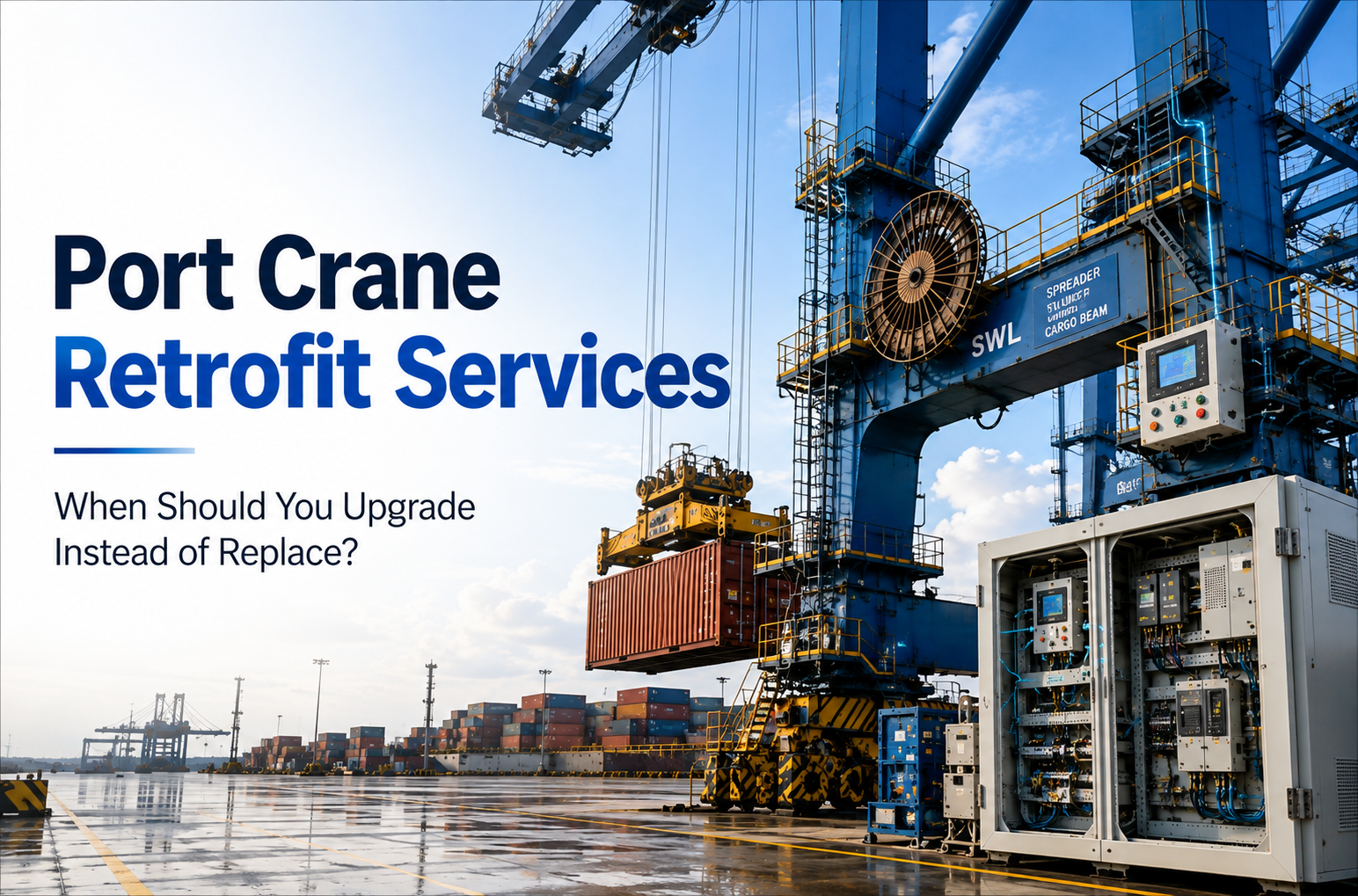
When a port crane starts showing its age through failing systems, rising maintenance costs, compliance gaps, the instinct is often to replace it. A new crane means new warranties, new standards, a clean slate. But in many cases, that instinct is expensive and unnecessary. The right question isn't "is this crane old?" It's "is the structure still sound?" Because if it is, a well-scoped retrofit can restore, and often exceed, original performance at a fraction of the cost and downtime of a new crane. The challenge is knowing when that's true and when it isn't.
The Decision Is Structural First
Everything else can be replaced. The one thing that cannot be cost-effectively replaced on an existing crane is its structural backbone: the steelwork, boom, gantry, and runway. If fatigue assessments and corrosion inspections confirm the structure is sound, with no major cracks, life-expired welds, or damage that's impractical to repair, the crane is a retrofit candidate. If the structure is compromised, no amount of systems modernisation changes that fundamental reality. The conversation shifts to replacement. This is the first and most important assessment and it needs to be done by someone without a commercial interest in the outcome.
The Key Factors: Upgrade vs. Replace
Once structural condition is established, the decision involves several other factors assessed together:
• Operational requirements: If the crane's capacity, span, lift height, and duty cycle still match what the terminal needs, there is no structural argument for replacement. If operations have fundamentally changed, you need higher SWL, different geometry, or a significantly different duty cycle. The existing crane may not be the right platform regardless of its condition.
• Cost economics: A credible rule of thumb is if a modernisation plan costs more than 60–70% of a comparable new crane, run a full replacement business case. Below that threshold and most sound-structure retrofits come in at 30–50% of new-crane cost retrofit typically delivers better value. The caveat is if you're executing a second or third major upgrade on the same crane within a short period. Repeated modernisation of a declining asset is not the same as a single well-scoped refurbishment.
• Downtime tolerance: A retrofit can be phased. A new crane cannot. For terminals that cannot absorb weeks or months of outage for installation and commissioning, a staged upgrade, where individual systems are replaced while the crane remains operational between phases, is often the only realistic option.
• Maintenance trend: Isolated failures in specific systems—controls, drives, electrical —are a retrofit signal. They indicate that systems have aged but the crane as a whole is not in systemic decline. Escalating maintenance costs across multiple systems, repeated breakdowns, and rising unplanned downtime are different. They suggest a crane in overall decline where modernisation will only chase the problem.
• Compliance and safety: Most safety and code compliance gaps can be addressed through targeted upgrades: new controls, sensors, protection devices, VFDs, updated safety systems. If the compliance gaps are structural or so fundamental that they cannot reasonably be addressed without replacing the crane itself, that changes the calculus.
When Retrofit Makes the Most Sense
The clearest retrofit case is a crane with a sound structure and outdated systems. The mechanical backbone is healthy, but the controls are obsolete, the drives are unreliable, and safety systems don't meet current standards. This is an extremely common profile at Indian ports, where cranes built in the 1990s and early 2000s are structurally intact but running on technology that is no longer supportable.
Other clear retrofit scenarios:
• Targeted performance gains: You need better energy efficiency, automation readiness, or safety without changing capacity. VFD drive upgrades, new PLCs, anti-collision systems, and load monitoring can be added to existing cranes at controlled cost.
• Budget and schedule constraints: Capital is limited, or the terminal cannot justify the full capex and downtime of a new crane. A retrofit delivers compliance and reliability on a faster, cheaper path.
• Phased modernisation: Terminal operations require continuity. Individual systems can be upgraded in stages between operational windows.
A typical retrofit scope for a port crane includes control system replacement, drive upgrades (VFDs), operator cabin modernisation, sensor and automation add-ons, and electrical system overhauls. Done properly, this restores or exceeds original performance and extends useful life by 5–10 years, with a clearly defined Designed Work Period post-refurbishment.
When Replacement Is the Smarter Move
Retrofit is not always the right answer. There are situations where replacement is the more responsible recommendation:
Life-expired structure. Fatigue, corrosion, or damage that makes the crane unsafe or uneconomical to maintain. No systems upgrade addresses a structural problem.
Changed operational profile. The terminal now needs capacity, geometry, or duty cycle that the existing crane cannot provide regardless of its condition.
Economics tip over. When modernisation costs approach 60–70% of a new crane, or the terminal is on its second or third major upgrade cycle with diminishing returns, a full replacement business case is necessary.
Chronic reliability. When escalating maintenance and unplanned downtime consistently outweigh the operational value of keeping the asset, the asset is past the point where investment makes sense.
A Practical Starting Point
The decision deserves a structured assessment, not a reactive one made after a breakdown. At PORTECH, our starting point is always a condition assessment of the structure and a review of the crane's maintenance history, not just what exists on paper, but what the equipment is actually showing through its wear patterns and failure history. From there, the upgrade vs. replace question has an objective answer rather than a commercial one. That assessment is where the right decision starts.