




Port Crane Modernization: Key Upgrades to Consider
September 23,2026
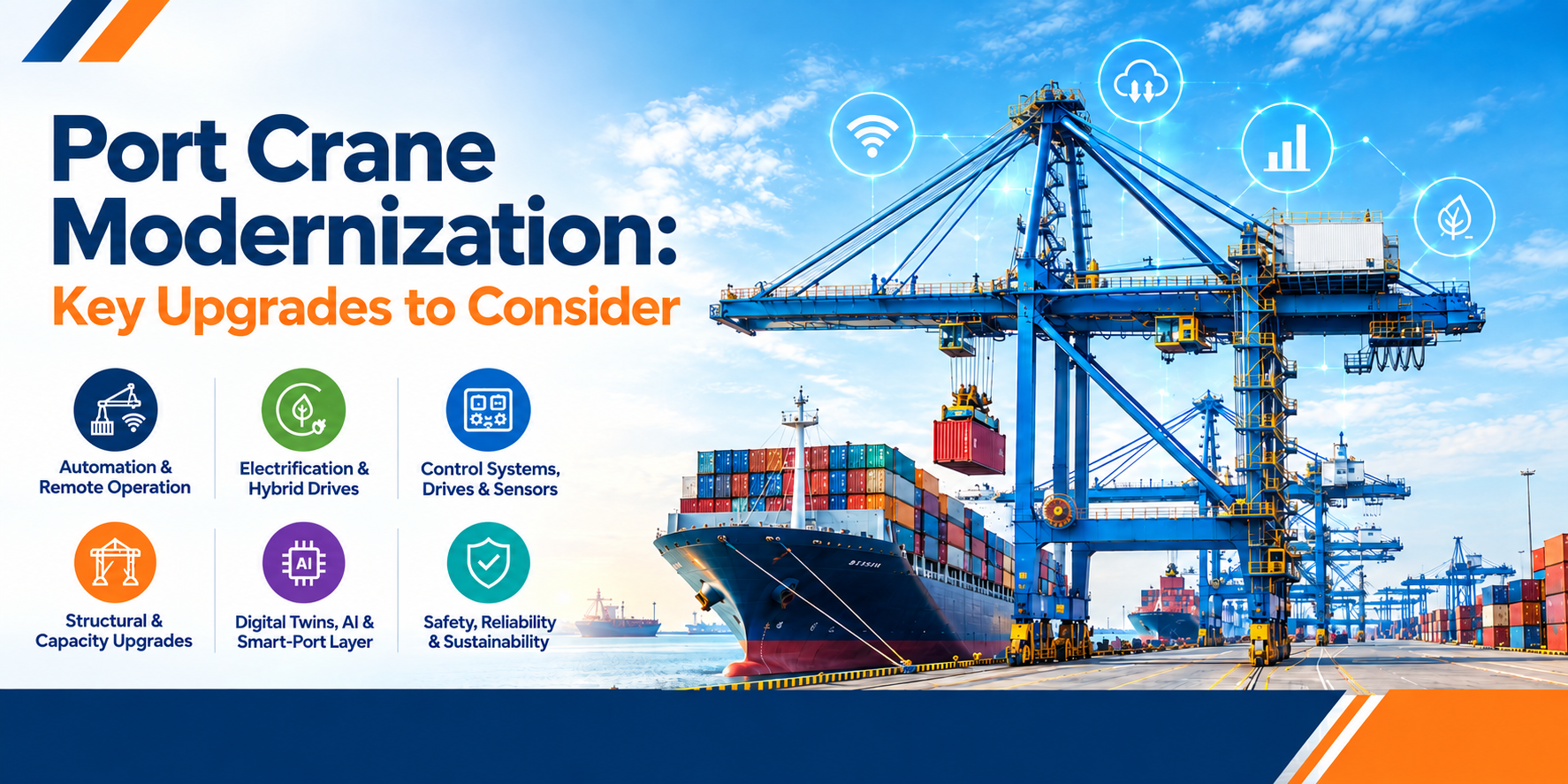
Indian ports are handling bigger ships, tighter turnaround targets, and stricter emissions mandates than they were even five years ago. That combination is pushing port crane modernization to the top of the capex list at terminals across the country. The upgrades that matter most aren't cosmetic. They touch automation, electrification, control systems, structural capacity, and the digital layer that ties a crane fleet together. Here is what's actually driving crane technology upgrades right now, and where Indian terminals are already putting them to work.
Automation and Remote Operation
Ship-to-shore (STS) crane automation is the most visible piece of the shift. Remote-controlled and semi-automated STS cranes cut operator fatigue, tighten cycle times, and standardize how moves get done — Vizhinjam in Kerala is already running remote-controlled STS cranes as a live reference point. In the yard, automated Rail-Mounted Gantry (RMG) and Rubber-Tyred Gantry (RTG) cranes with anti-sway and precision motion control are pushing stacking density and safety further than manual operation allows. None of this works in isolation, though it depends on tight integration with the Terminal Operating System (TOS), so cranes, job sequencing, and real-time visibility all stay in sync.
Electrification and Hybrid Drives
Electrification is where the emissions math and the operating-cost math start to agree. E-RTGs and hybrid RTGs cut fuel consumption and noise. Mundra has already added electric and hybrid yard cranes and reports measurable emission reductions as a result. Electrified harbour mobile cranes are following the same trajectory, and while onshore power and renewable integration aren't crane-specific, they are what makes an electrified fleet economically viable long-term. This shift also lines up directly with the government's Harit Sagar green-port guidelines, which makes electrification less a future option and more a near-term requirement for port equipment modernization.
Control Systems, Drives, and Sensors
A lot of the real productivity gain in container crane modernization happens quietly, inside the control cabinet. Retrofitting modern PLCs and electrical drives improves torque control and cuts energy use, while anti-sway systems and synchronized drives reduce cycle-time variability and lower the risk of load damage. Layer in condition-monitoring sensors — vibration, temperature, load — feeding predictive maintenance analytics, and unplanned downtime starts dropping well before it becomes a bigger capital problem.
Structural and Capacity Upgrades
Ultra-large container vessels, now running 24,000+ TEU, don't fit the reach envelope of older STS cranes. Height, outreach, and back-reach extensions, or new cranes altogether, are becoming necessary just to keep pace with mainline service schedules. On the yard and rail side, twin-lift and tandem-lift spreaders are boosting moves per hour, particularly where rail-port connectivity is expanding. None of this works if quay strength, rail gauge, and power supply aren't upgraded in step with the new crane loads.
Digital Twins, AI, and the Smart-Port Layer
Digital twins of crane fleets are increasingly used for simulation, training, and testing "what-if" scenarios before any physical change is made, a low-risk way to validate an upgrade path. At more advanced sites like Vizhinjam, AI-assisted vessel traffic and yard planning are already improving crane utilization indirectly. As more of this becomes network-connected, cybersecurity and OT network hardening have shifted from an afterthought to a core design requirement.
A Practical Upgrade Roadmap
For most Indian terminals, the sequence that works looks like this:
1. Audit the existing fleet — age, duty cycle, energy use, failure modes, and compatibility with larger vessels.
2. Define the target vessel and throughput profile for the next 10–15 years, including STS outreach, height, and yard moves-per-hour targets.
3. Start with quick-win retrofits — PLC and drive upgrades, anti-sway systems, predictive maintenance sensors — before committing to major capex.
4. Phase in electrification, starting with e-RTGs or hybrid RTGs on the highest-utilization blocks, aligned with onsite power planning.
5. Layer in automation gradually — semi-automation and remote operation first, full automation once TOS maturity and workforce readiness catch up.
6. Secure spares, training, and cybersecurity early, since software-defined and remotely accessible systems raise the stakes on all three.
Domestic manufacturing is catching up too. BEML's partnership with HD Korea Shipbuilding & Offshore Engineering and HD Hyundai Samho points toward smart, energy-efficient, eventually autonomous cranes built in India, reducing the country's reliance on imports.
Port crane modernization isn't a single upgrade, but a sequence of decisions made in the right order. Connect with PORTECH for scheduled, comprehensive testing and maintenance that keeps your fleet ready for whatever the next phase of upgrades demands.