




Port Crane Brake System Maintenance: Inspection and Safety Guide
September 30,2026
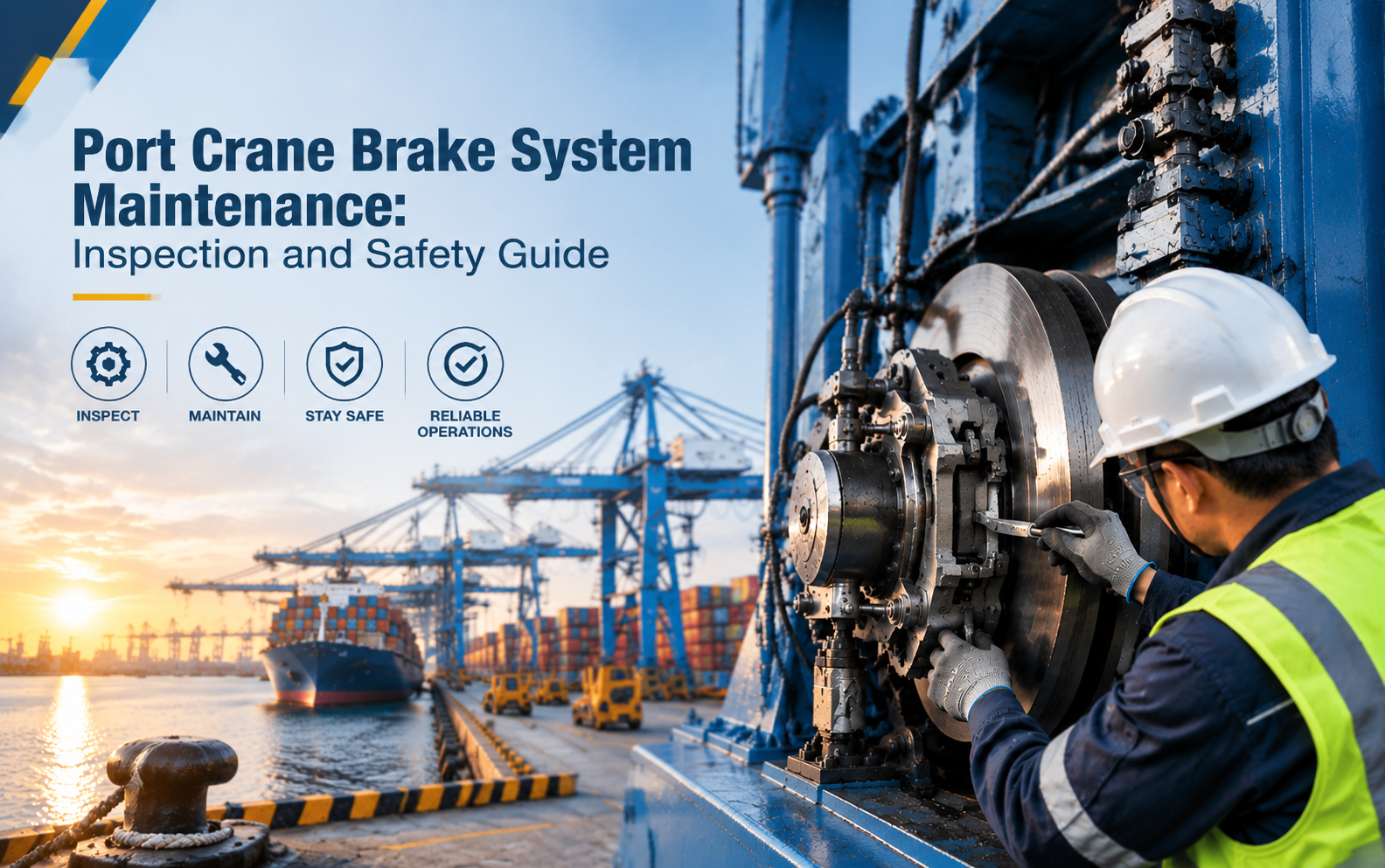
A port crane's brake system doesn't get a second chance to fail. On STS, RTG, RMG, and mobile harbour cranes, brakes go through constant stop-and-hold cycles under heavy loads, salt air, dust, and heat conditions that wear components down faster than almost any other part of the machine. Degraded brakes show up as increased clearance, reduced holding torque, overheating, or delayed engagement, and in the worst cases, a load drop or uncontrolled travel. That's why brake maintenance is routine work by trained personnel, backed by periodic thorough examination from a competent person, to catch deterioration before it becomes dangerous.
What a Brake Inspection Should Cover
A proper inspection program looks at three layers of the system: mechanical, hydraulic/pneumatic, and control.
Mechanical components. Check brake linings, pads, discs, and drums for wear thickness, glazing, cracking, and contamination from oil, grease, or salt. Most RTG hoist brake pads need replacement once thickness drops to around 3 mm, though manufacturer limits vary. Look for scoring, rust, heat spots, or warping on discs and drums — discoloration or hot spots are a clear sign of excessive cycling or drag. Shoes, springs, levers, and linkages need to move freely, with correct alignment and no binding or corrosion. Where sprag clutches or drum pawls are fitted, each one needs independent testing to confirm engagement time meets specification — a fault here can go unnoticed until it matters most
Hydraulic and pneumatic systems. Test pressure settings, response time, and leakage across hoses, seals, valves, and accumulators, and confirm the oil grade and condition match manufacturer intervals. For pneumatic brakes, check air pressure, dryer function, and valve operation for quick, repeatable release. Actuators and solenoids should energize, stroke, and release cleanly — sticking or delayed response is a red flag, not a minor annoyance.
Functional and operational checks. During actual operation, confirm smooth, complete release and positive engagement in both directions with no dragging or hesitation. Verify stopping action and timing against specification, and document any drift or overshoot. Holding performance matters most on hoist brakes — rated loads should hold without creep, and emergency brake tests should be documented at least monthly on RTGs, in line with standards such as EN 15011. Unusual noise, heat, or vibration should trigger an immediate inspection, not wait for the next scheduled check.
Safety system integration. Confirm that limit switches, anti-collision systems, and emergency stops interlock correctly with the brakes, and that fail-safe behaviour — spring-applied, hydraulically released brakes engaging automatically on power loss — actually works when tested.
Setting an Inspection Schedule
Most ports run a tiered schedule:
• Daily/weekly: functional checks on brakes, ropes, hooks, spreader, and controls — watching for abnormal noise, heat, leaks, or response delay.
• Monthly: pad thickness measurement, torque checks, hydraulic/pneumatic inspection, and documented emergency brake load tests.
• Periodic/annual: a full examination by a competent person covering every brake component that could deteriorate into a dangerous condition, including load tests and certification.
Records matter as much as the inspections themselves — logs of adjustments, pad and disc replacements, oil changes, load tests, and certifications are what regulatory and audit requirements actually ask for, including standards like OSHA 1910.179 where applicable.
Working Safely on Brake Systems
Brake work carries its own risk, so the basics can't be skipped: lock out and tag out all energy sources—electrical, hydraulic, pneumatic, and gravity—before any inspection or repair. Stop operations and fully depressurize hydraulic or pneumatic lines before disassembly. Use proper fall protection and confined-space controls when working at height on STS or RTG structures. And follow OEM guidance on oil grades, adjustment procedures, and torque values — deviating from spec is a common cause of warping, slippage, and premature failure.
Where Failures Usually Start
Most brake failures trace back to a handful of patterns: rapid pad wear from high-cycle braking, overheating and glazing from dragging brakes or poor release settings, hydraulic contamination or wrong oil grade causing sluggish response, and sprag or pawl faults that only surface under independent testing. Catching these early is almost always cheaper and safer than dealing with the failure they lead to.
Brake systems don't give much warning before they fail. Connect with PORTECH for scheduled, comprehensive testing and maintenance that keeps your crane's braking performance where it needs to be.