




Electrical Control Panel for EOT Crane
July 08,2026
If you have ever stood next to an EOT crane mid-lift and watched it stall, jerk, or throw a fault code out of nowhere, chances are the problem wasn't the hoist motor or the wire rope. It was the control panel. The electrical control panel is the nerve centre of any EOT (Electric Overhead Traveling) crane. Every motion hoisting, cross travel, long travel is governed by the logic, contactors, and protective devices sitting inside that panel. Get the panel design wrong, or let its maintenance slide, and you're not just risking downtime. You're risking safety.
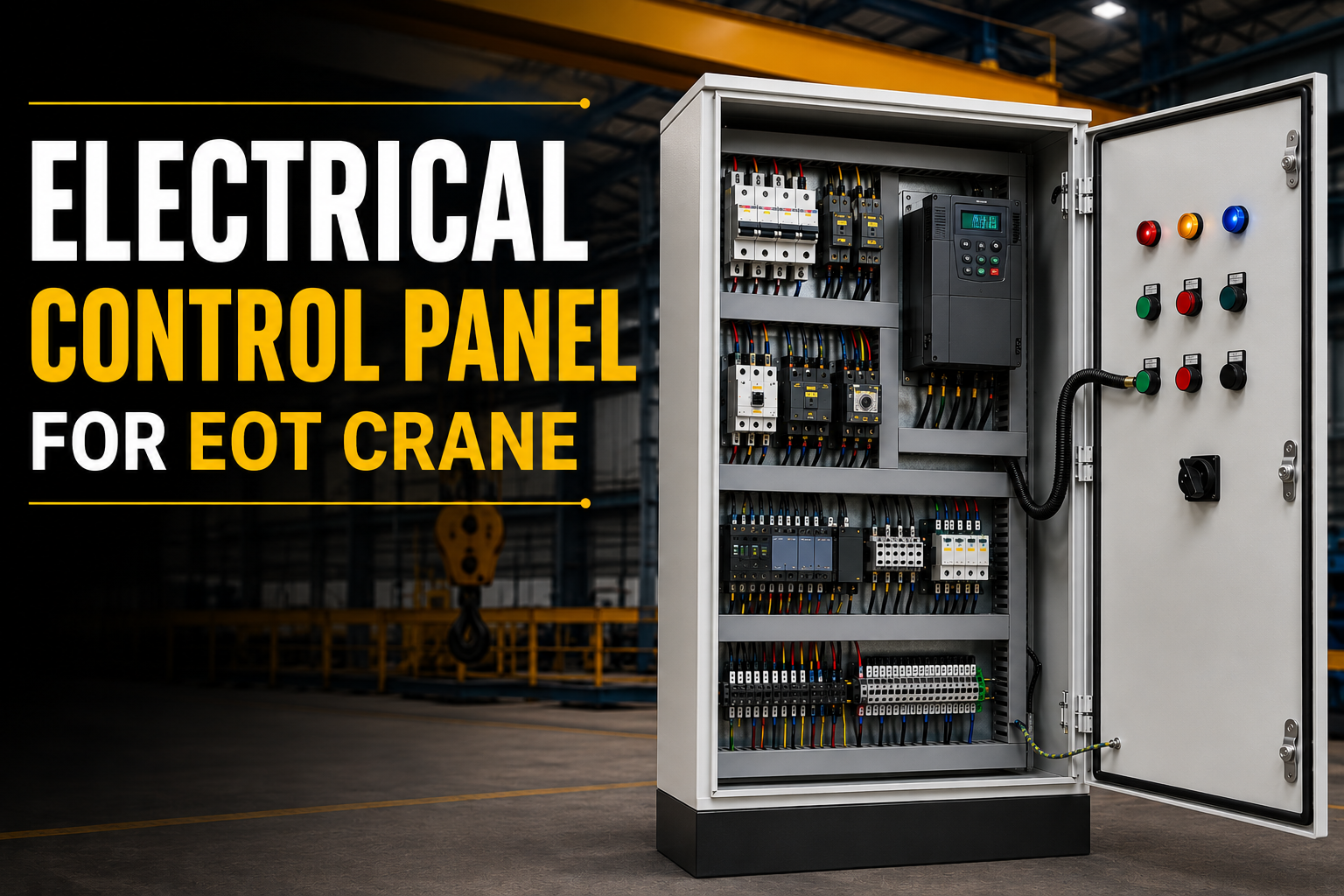
What Actually Sits Inside the Panel
A typical EOT crane control panel isn't just a box of switches. It houses:
• Main and auxiliary contactors that switch power to the hoist and travel motors
• Overload relays and circuit breakers for motor protection
• VFDs (Variable Frequency Drives) where speed control is needed, especially on hoist motion
• PLC or relay logic that sequences operations and interlocks
• Limit switch circuits for over-hoist, over-travel, and slack rope protection
• Control transformers stepping down supply voltage for control circuits
• Indicator lamps, meters, and fault annunciation for operator feedback
Each of these components has to be sized correctly for the crane's duty class. A panel designed for a light-duty, intermittent-use crane won't hold up under the thermal cycling of a three-shift, heavy-duty application. This is where a lot of panels fail early because they were never matched to actual usage.
Why Panel Design Decisions Matter Long-Term
We have walked into more than one facility where the crane itself was mechanically sound, but the panel was the weak link, undersized contactors pitting under load, thermal relays tripping nuisance faults, or wiring runs that made troubleshooting a half-day job instead of a ten-minute fix.
A well-designed panel earns its keep in three ways:
• Fault isolation. Clearly labelled terminals and a logical wiring layout mean a technician can trace a fault fast, instead of guessing.
• Protection margins. Correctly rated overloads and breakers protect motors from the kind of repeated tripping that shortens winding life.
• Serviceability. Panels built with future maintenance in mind accessible layout, spare terminal capacity, clear documentation cost less to maintain over the crane's working life.
VFDs Are Becoming the Norm, Not the Exception
More facilities are moving from contactor-based (two-speed) control to VFD-based control on hoist and long travel motions, particularly where load handling needs to be smoother or where energy savings matter. VFDs reduce mechanical shock loading on the structure and ropes, and they give operators finer control, but they also mean the panel now needs proper filtering, cooling, and EMI considerations that a simple contactor panel never did. If your crane still runs on old-style two-speed control and you are seeing rope wear or structural fatigue faster than expected, it's worth having the control philosophy reviewed.
A Panel Health Check Is Cheaper Than a Breakdown
Most electrical panel failures don't happen without warning. Loose terminations, overheating contactors, and degraded insulation usually show early signs, a technician doing a proper thermal and visual inspection can catch these before they turn into an unplanned shutdown mid-shift. If your crane's panel hasn't been reviewed in a while, or if you are seeing intermittent faults that "fix themselves," it's worth getting a second set of eyes on it before it becomes a bigger problem on the shop floor.