




Efficient Bulk Handling Systems for Modern Ports & Terminals
July 22,2026
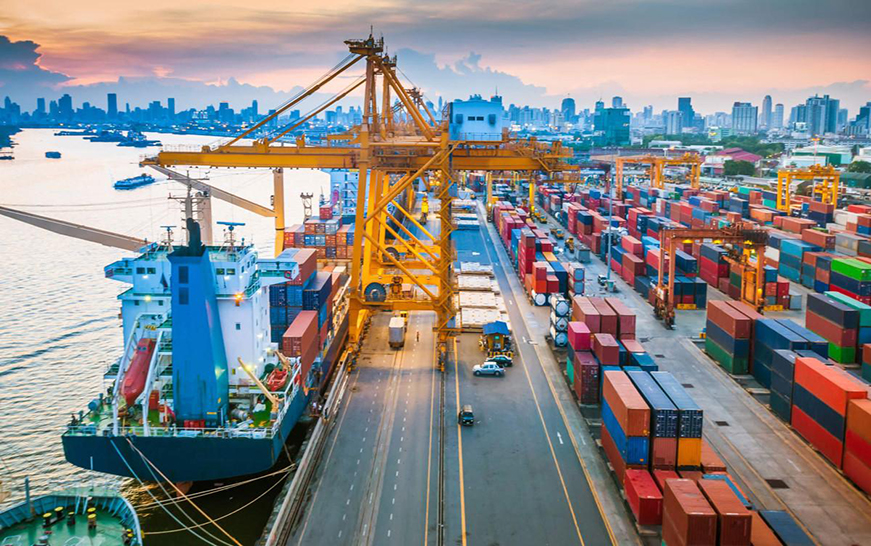
Every tonne of bulk cargo that moves through a port — coal, clinker, grain, ore — passes through a chain of mechanical decisions. It involves the crane or handler that lifts it, the conveyor that carries it, the drive that powers it. Get those decisions right, and a terminal can move more cargo without adding a single square metre of yard space. Get them wrong, and even a well-laid-out port ends up bottlenecked at the berth. At PORTECH, this is the layer we spend most of our time in, the equipment and systems that actually move bulk material from ship to stockyard and back again.
The main reasons for the necessity of these services in Haldia Port are:
Choosing the Right Handling Equipment
The equipment at the centre of the operation sets the ceiling on throughput. We increasingly recommend hydraulic material handlers over traditional cable cranes for bulk and mixed-cargo terminals. A hydraulic arm holds the load rigidly through the cycle, which means faster, more repeatable movements and far less swing to manage. Switching attachments also lets the same machine handle containers one shift and steel coil the next.
Conveyors remain the arteries of any bulk terminal. Inside the port, mobile and shiftable belt conveyors, along with air-supported belt conveyors (ASBCs), keep material flowing with fewer rotating parts, which translates directly into lower power draw and less maintenance. For longer hauls, overland, pipe, and U-shape conveyors are worth considering over truck or rail. Pipe conveyors in particular are fully enclosed, control dust and spillage, and can climb inclines up to 30 degrees where a standard conveyor can't.
On the loading side, ship loaders with luffing, slewing, and telescopic booms give terminals the flexibility to handle varying vessel sizes without repositioning equipment constantly. For dust-sensitive materials like clinker and coal, we look at Eco Hoppers specifically built to contain that dust at the transfer point.
Where the Real Efficiency Gains Come From
Equipment selection is half the picture — the drive and control systems behind it do the rest of the work.
Modern VVVF (variable voltage, variable frequency) drives let us tune belt loading precisely and share load accurately across multiple motors, with controlled starts and stops that take mechanical stress off the whole system. Done right, this alone can bring energy savings of up to 20% over older fixed-speed setups.
Energy recovery is the next lever. Regenerative drives return the energy from a decelerating load to the power network instead of burning it off as heat. On material handlers, technologies like Hybrilift® capture the energy released as a boom lowers and reuse it on the next lift, in the right application, that can cut fuel costs by up to half. Where diesel is still unavoidable, DualPower setups pairing diesel engines with electric motors let equipment run on shore power whenever it's available, trimming emissions without sacrificing flexibility.
Squeezing More Out of What You Already Have
Not every capacity problem needs new equipment. Often it's about removing friction:
• Cutting equipment downtime and tightening cycle times
• Better coordination between vessel arrivals, stockyard movement, and outbound transport
• Real-time monitoring and IoT-driven data to catch maintenance issues before they cause a shutdown
• Reviewing shift patterns and vessel scheduling to unlock capacity from existing assets
• Matching the attachment to the material — a clamshell grab for grain, a grapple for scrap — to cut cycle counts and spillage
We've seen terminals lift throughput meaningfully just by working through this list before touching a single new asset.
Built for the Environment, Not Around It
Environmental compliance isn't an add-on anymore. It shapes equipment selection from the start. Fully enclosed conveyors and ASBCs handle dust control at the source. And there's a quieter benefit to fast, efficient cycles: less energy spent per tonne handled means a smaller emissions footprint, without any extra effort. Safety follows the same logic, a hydraulic handler's rigid, controlled movement is inherently safer to work around than a swinging cable-operated load. If your terminal's handling setup hasn't been reviewed against what's possible today, it's worth a conversation before your next capacity crunch forces the issue.