




STS Crane Maintenance: Improving Reliability in High-Volume Container Ports
August 12,2026
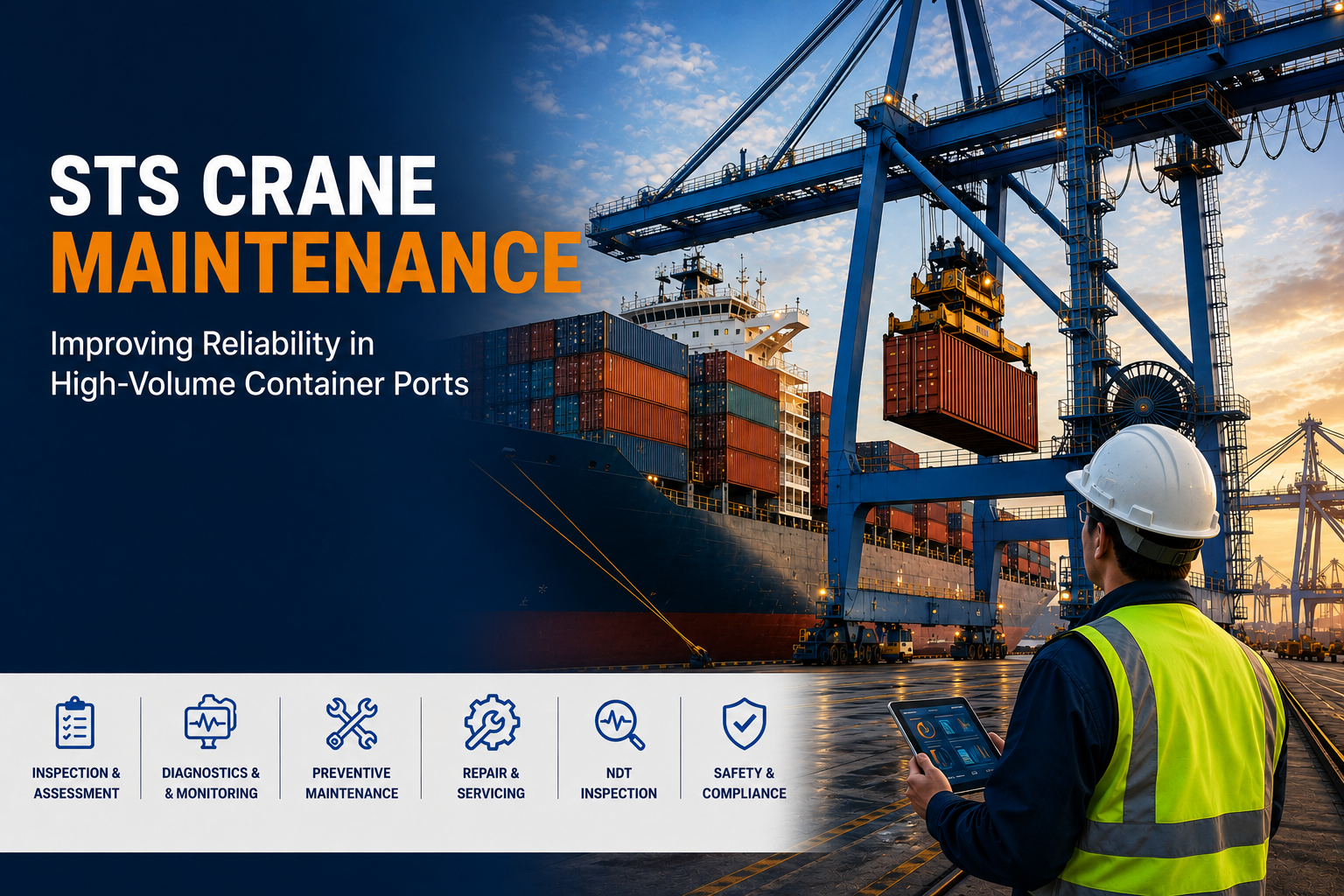
Modern container ports operate under constant pressure to move cargo quickly, safely, and efficiently. At the center of these operations are Ship-to-Shore (STS) cranes, which handle containers between vessels and the terminal. Because these cranes operate continuously in demanding marine environments, regular STS crane maintenance is essential for preventing unexpected downtime and maintaining terminal productivity.
For high-volume container terminals, even a short crane stoppage can disrupt vessel operations, increase turnaround time, and create significant financial losses. A proactive maintenance strategy helps port operators identify potential problems before they become major failures.
Why STS Crane Maintenance Matters
STS cranes consist of complex mechanical, electrical, hydraulic, structural, and control systems. Continuous lifting operations place considerable stress on components such as hoisting mechanisms, wire ropes, brakes, gearboxes, motors, wheels, spreaders, and electrical systems.
Routine inspections and preventive maintenance help identify wear, corrosion, alignment problems, abnormal vibration, electrical faults, and other issues at an early stage. This allows maintenance teams to schedule repairs during planned shutdowns instead of dealing with unexpected breakdowns during vessel operations.
Effective maintenance also contributes to workplace safety. A properly maintained crane reduces the risk associated with mechanical failures, structural defects, and malfunctioning safety systems.
Preventive Maintenance for Better Crane Reliability
Preventive maintenance is one of the most effective approaches for maintaining STS crane performance. It involves scheduled inspections, servicing, lubrication, component replacement, testing, and adjustments based on operating conditions and manufacturer recommendations.
Key maintenance activities may include:
• Mechanical and electrical system inspections
• Wire rope and lifting equipment checks
• Brake and gearbox inspection
• Hoist and trolley system maintenance
• Structural inspection for cracks and corrosion
• Wheel and rail alignment checks
• Electrical panel and control-system testing
• Lubrication and replacement of worn components
• Safety device and emergency system testing
A structured maintenance program allows port operators to monitor equipment condition and plan maintenance activities according to actual operational requirements.
The Role of Diagnostics and NDT Inspection
Advanced diagnostics and Non-Destructive Testing (NDT) can provide valuable information about the condition of critical crane components without causing damage to the equipment.
NDT techniques can help detect hidden structural defects, cracks, material degradation, and other problems that may not be visible during a routine visual inspection. Combining inspection data with operational history allows maintenance teams to make better decisions about component repair or replacement.
Condition monitoring can also help identify developing problems through changes in vibration, temperature, noise, electrical performance, or other operating parameters.
Reducing Unplanned Downtime
Unexpected equipment failure can have a major impact on container terminal operations. When an STS crane becomes unavailable, vessel loading and unloading activities may slow down or stop, affecting the entire terminal workflow.
A proactive maintenance strategy reduces this risk by focusing on early detection and planned intervention. Instead of waiting for a component to fail, maintenance teams can replace or repair components based on inspection results and condition assessments.
This approach can improve equipment availability and help ports maintain consistent productivity during periods of high cargo volume.
Structural and Mechanical Reliability
The structural integrity of an STS crane is particularly important because the equipment operates with heavy loads at significant heights. Regular inspection of structural members, welds, connections, gantry systems, ladders, platforms, and other critical areas can help identify corrosion, fatigue, cracks, and deformation.
Mechanical systems also require consistent attention. Hoisting systems, gearboxes, brakes, wheels, bearings, wire ropes, and spreaders should be inspected and serviced according to their operating conditions.
Choosing an Experienced Port Crane Maintenance Partner
High-volume container terminals require maintenance partners with specialized knowledge of port equipment and demanding operating environments. A capable service provider should be able to support inspection, diagnostics, preventive maintenance, repair, refurbishment, and commissioning requirements. PORTECH Engineering Pvt. Ltd. provides port crane maintenance, repair, diagnostics, NDT inspection, painting, erection, and commissioning services for demanding crane operations.
Conclusion
Reliable STS cranes are fundamental to efficient container terminal operations. Regular inspections, preventive maintenance, diagnostics, and timely repairs can help improve equipment availability, safety, productivity, and operational life.
For ports handling high container volumes, investing in a planned STS crane maintenance program is not simply a maintenance expense it is an important part of maintaining long-term operational reliability and minimizing costly downtime.